
Hot-pepper farm gets the most spice out of a short season
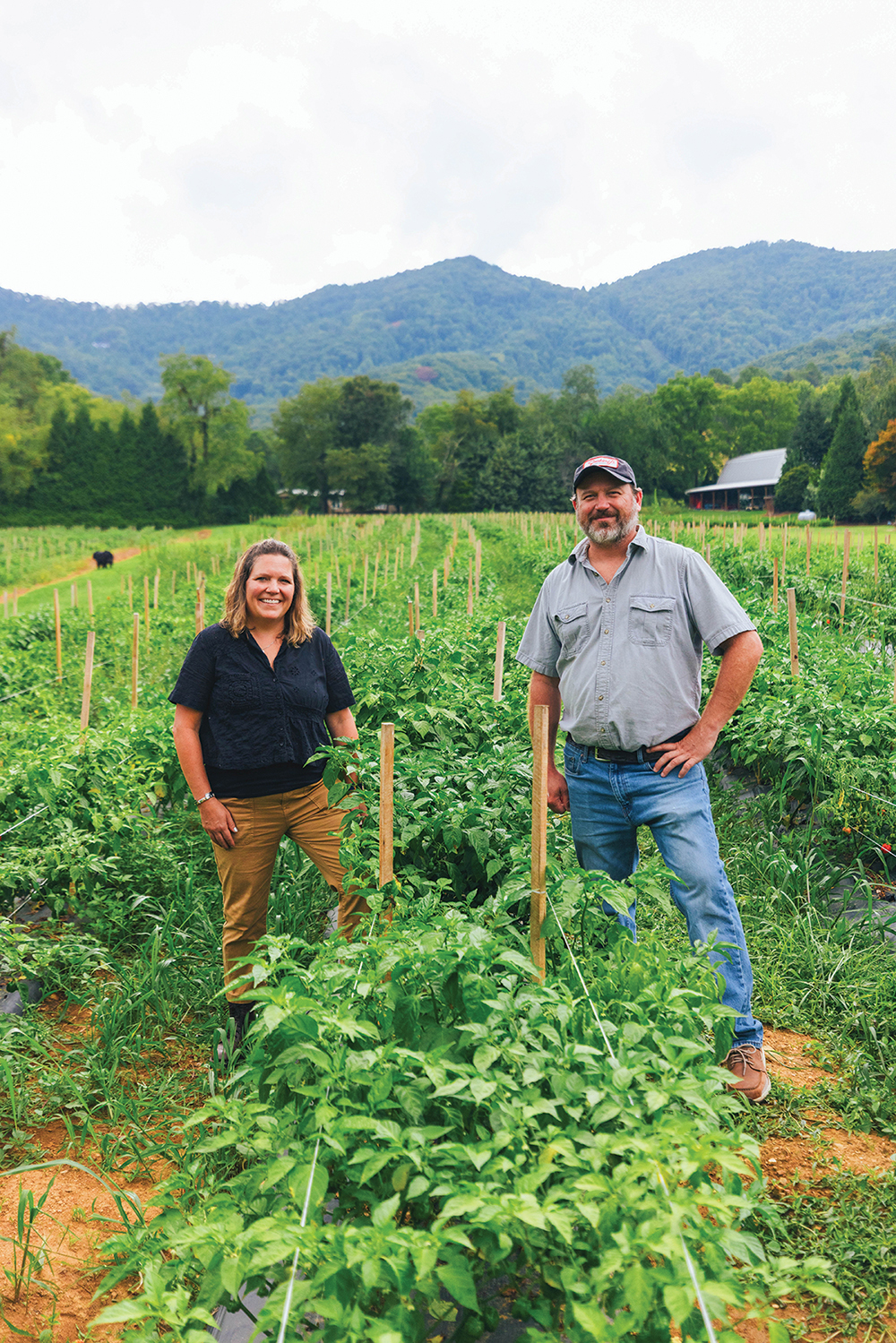
Tara and Joel Mowrey stand in the rows of their scenic farm in Candler, a boutique hot-pepper operation that wholesales to condiment companies nationwide.
Portrait by Rachel Pressley
With a degree in forestry, Joel Mowrey moved from Southern Ohio to Western North Carolina in 2001, spending the next 16 years working at the Mountain Horticultural Crops Research and Extension Center in Mills River, Henderson County, a facility administered by NC State University. As Mowrey explains, “That’s where I developed a passion for rare and unusual plants, largely as a hobby. My wife Tara and I like to cook, can foods, and eat spicy foods. So after working for NC State I got into farming rare, exotic hot peppers.”
The family and staff grow their seasonal peppers for a variety of markets, selling the bulk of their wholesale output to condiment companies. They’ve also branded their own line of mashes, dry rubs, salsas, barbecue sauces, and more than a dozen signature hot sauces, selling over 50,000 bottles a year of Smoking J’s Fiery Foods products to outlets nationwide.
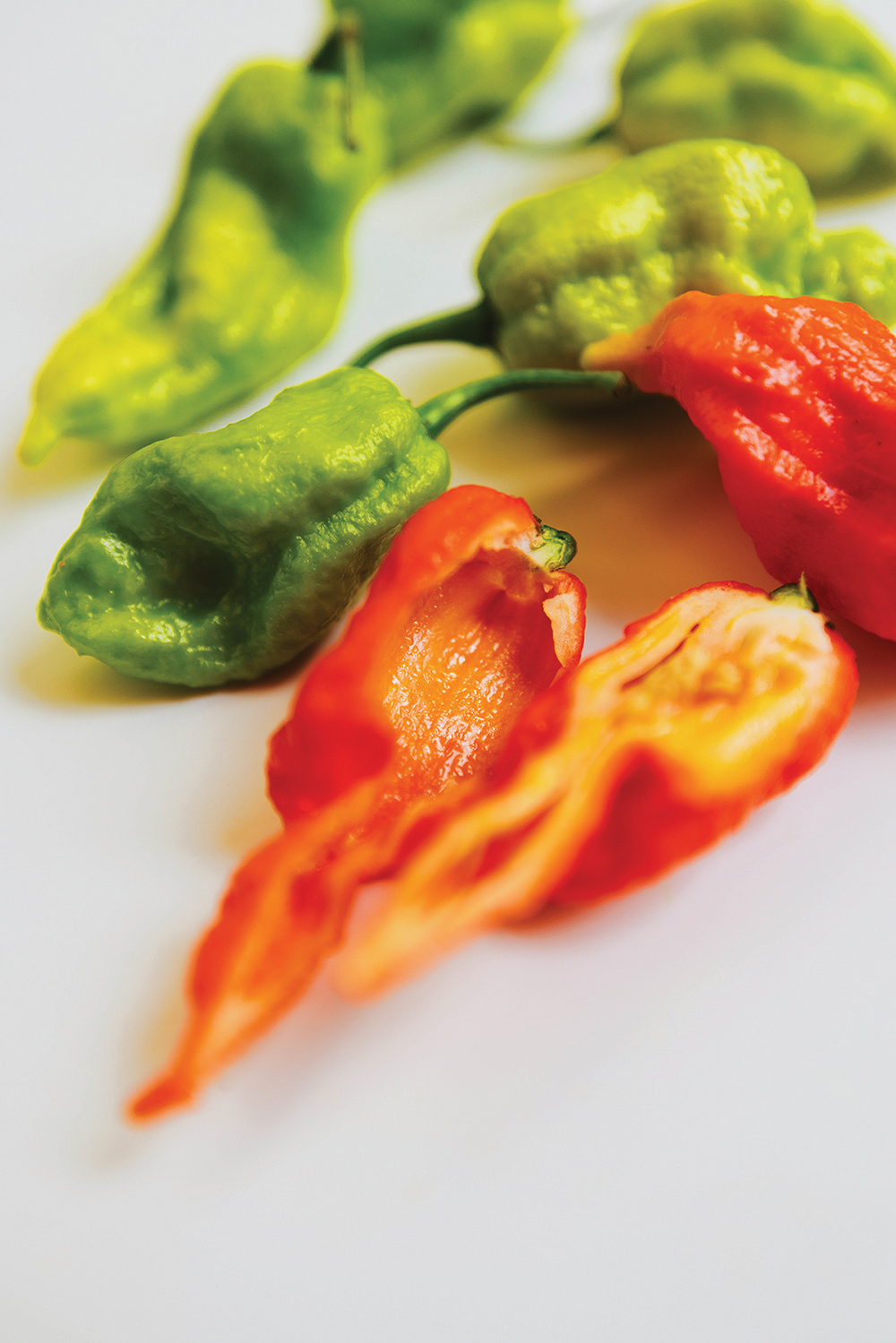
Mowrey cultivates varietals such as the tongue-numbing Trinidad Scorpion and Carolina Reaper (the latter still holds the record as the world’s hottest pepper) and the blistering Ghost pepper, as well as boutique peppers including the fruity-hot Fatalii and Datil, originating respectively from Central Africa and from St. Augustine, Florida.
In a poetic twist, he bottles all that heat in a facility that was home to the Upper Hominy Fire Department for more than half a century.
Isn’t it unusual to have a commercial hot-pepper farm in a mountain climate?
The seasons are longer in other climates, but we are protected [from colder temperatures] at the base of a large mountain cove. Ours is a unique microclimate where we get fairly full sun, and our farm has good drainage. We were very fortunate that our property only suffered minimal damage [from Hurricane Helene in September 2024].
So in this case drainage is more critical than temperature?
As farmers say, you can add water, but you can’t take it away. With heavy rain, you have more fungus and disease issues, but when it’s hot and dry, we can supply water to our plants as needed, and our valley is water-rich but also protected from major rain events. We have great groundwater and creeks bordering the property.
What about the impact of climate change?
Over the past 15 years there have been more unusual weather events, but since I started farming peppers, we only had one season when it was [continually] wet.
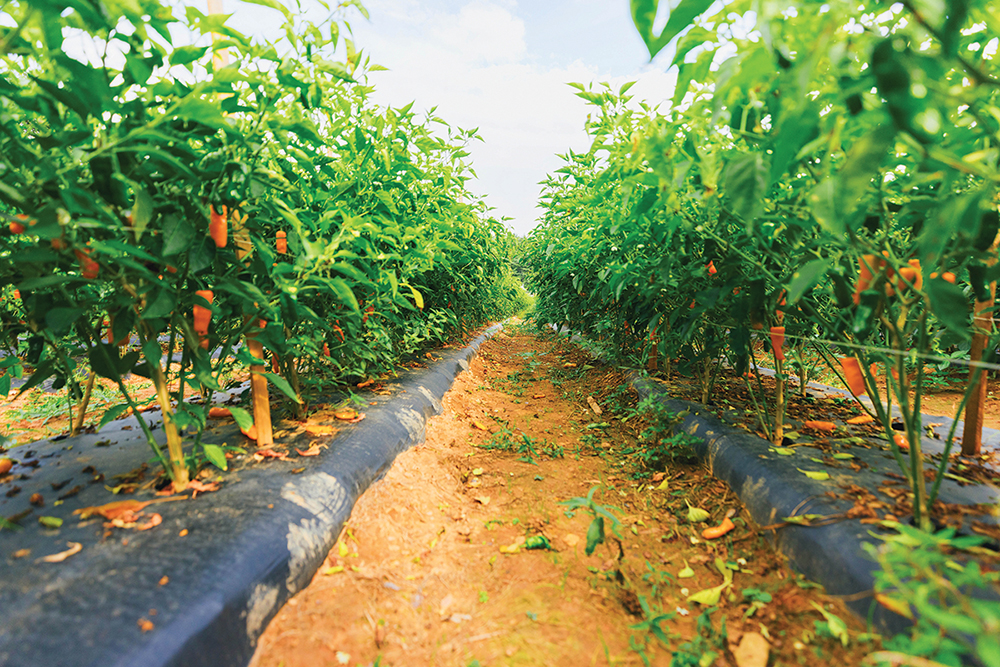
Photo by Rachel Pressley
But most hot peppers originate from the tropics or at least from hotter locations in the U.S. [The Carolina Reaper was invented in Fort Mill, SC.] How do you handle a high-elevation growing season?
We start plants from seed in greenhouses in February, plant them in the field in mid May, and the season runs until the first frost. Our busy months are August, September, and October, when we harvest.
Since you grew into a manufacturing business as well as a farm, how many acres and plants do you now have under cultivation?
We went from a half acre and 5,000 plants to 50,000 plants and 15 acres a few years later. Now we have about 150,000 pepper plants in production.
But you’re still considered a small specialty farm?
Yes, we cultivate harder-to-find varieties. I’d rather be specializing on a smaller, hands-on farm, with a business supplying something that creates its own demand with more unusual types of peppers. Jalapeño is the bread and butter of the pepper industry, and they are mass produced on a huge scale. I can’t farm enough land to compete with that: Contiguous land around here is cut off by the mountains, hard to come by, and very expensive. We are first-generation farmers, and you have to carve out something different for yourself to make a living off smaller parcels of land.

Photo by Rachel Pressley
Still, 150,000 plants sounds like a lot. Do you use machinery?
No, every pepper we grow is harvested by hand, and we do plenty of hand weeding, too.
That’s a massive undertaking. How many people does it take?
During harvest, we usually employ 12 people. It’s hard, because you can’t start until it’s light out, but you can’t beat the heat, and [have to] work all day in extremely hot weather.
With layers on, no less. How do you protect yourself and your workers from the capsaicin in hot peppers that can burn skin?
For harvesting, long sleeves and pants are preferred and nitrile rubber gloves are a very smart choice. When we process peppers we wear aprons and long pants and sleeves.
That’s a lot of PPE [Personal Protective Equipment] …
Respirators are also required.
Smoking J’s Fiery Foods, 36 Rootstock Road, Candler, smokingjsfieryfoods.com, 828-230-9652.