
Colorful cottage garden took root from a familiar beauty
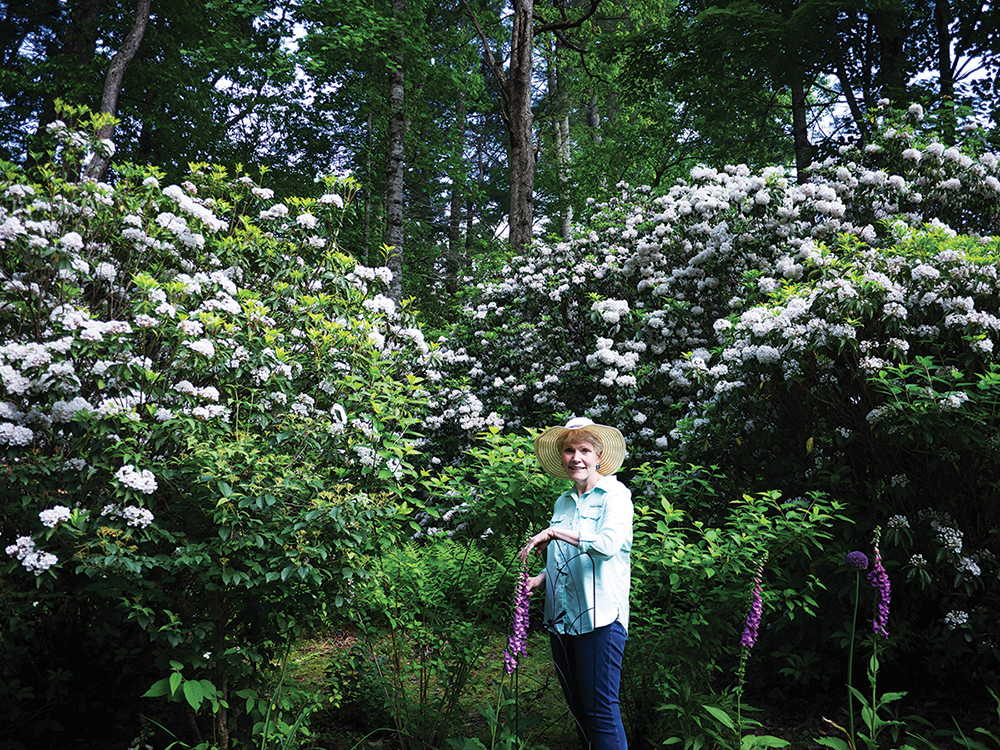
Photo by Rimas Zailskas
Mountain laurel, with its glossy evergreen leaves and clusters of delicate, tea-cup-shaped flowers, is a bit of a misnomer. Belonging to the same heath family as rhododendron and azalea, it can actually be found up and down the entire East Coast, from New England to North Florida and as far inland as Louisiana — in other words, in many places with decidedly non-mountainous topography.
But it’s only in the Southern Appalachians that the typically bushy plant enjoys just the right confluence of environmental factors to be able to grow tree-high. The terms “laurel slick” and “laurel hell,” used by settlers in the Blue Ridge mountains to describe the plant’s dense mass of intertwined branches, prove that while mountain laurel might be a pretty shrub in other places, around here it once enclosed hilltops like a maze in a ghost story, and was clearly nothing to be trifled with.
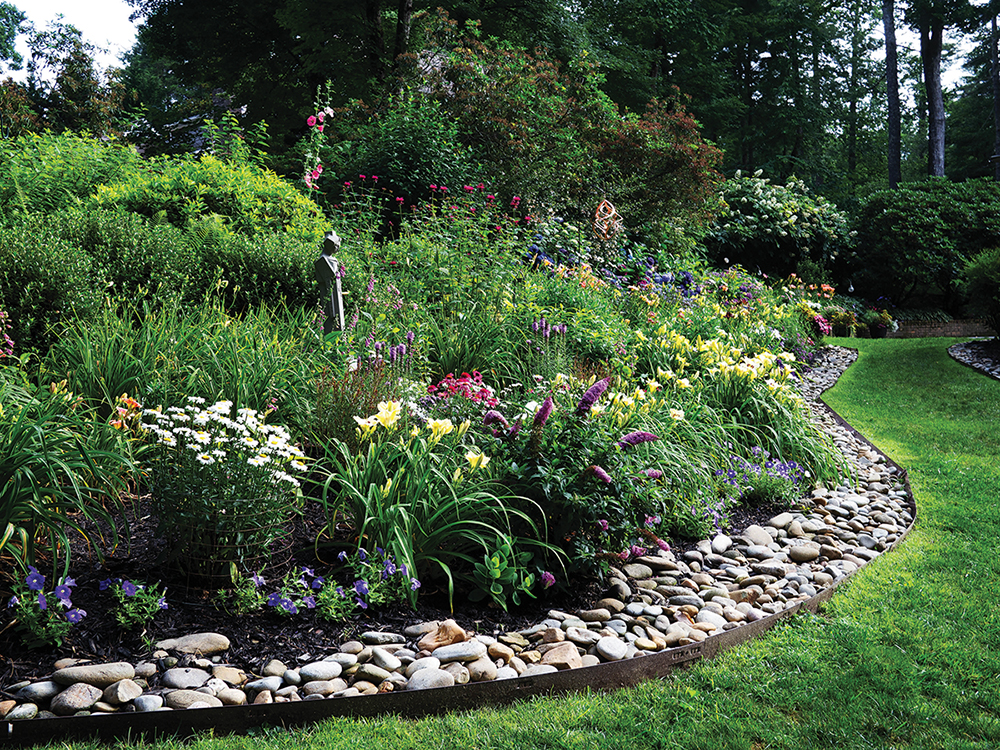
Photo by Rimas Zailskas
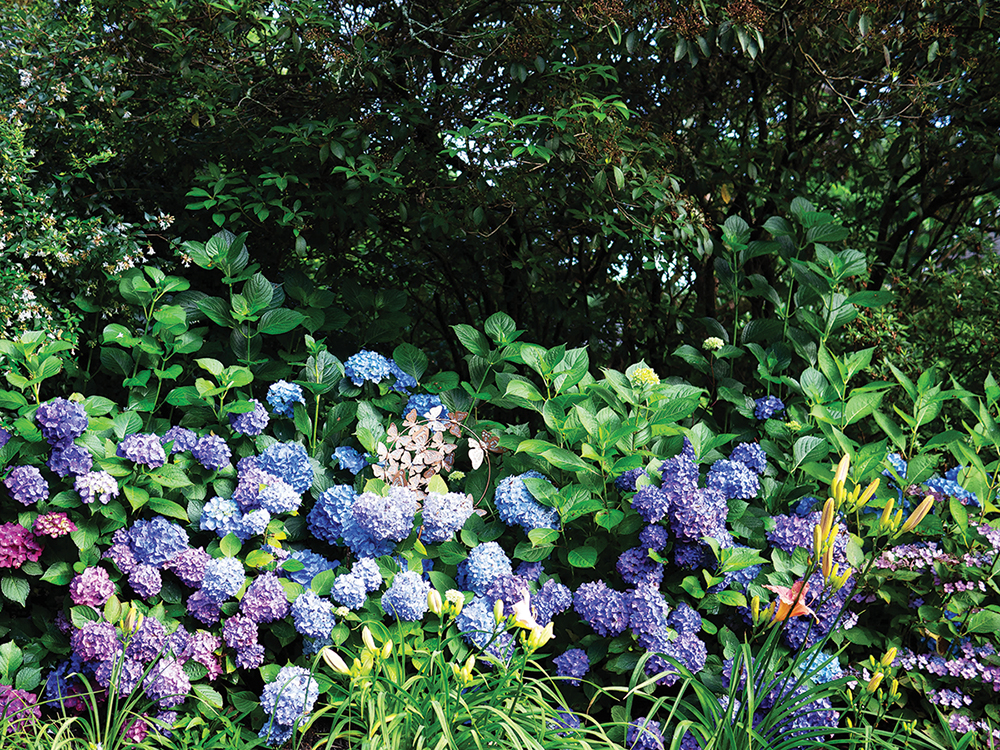
Loretta Buettner would likely prefer the term “heaven” to “hell” in referring to the towering stands of mountain laurel she’s nurtured at her Flat Rock Lakes home. In deep spring the laurel lurks high, thick, and deep, standing far above the petite gardener and running back, like a blizzard of tossed snowballs, to the edge of the tree line.
“God had already established [these] beautiful old mountain laurels surrounding the [then] mostly barren landscape” of the property she and her husband Terry bought after he retired from the Air Force, says Buettner. To complement the naturally thriving beauties, she says she had “grandiose ideas of establishing the perfect formal garden.” But, over the decades, she gradually altered her vision to a semi-wild, varied lushness more in keeping with the natural mountain aesthetic. She calls the result a “colorful, chaotic cottage style” that currently numbers daisies, foxglove, phlox, lantanas, and coreopsis, among other plants and flowers.

Photo by Rimas Zailskas

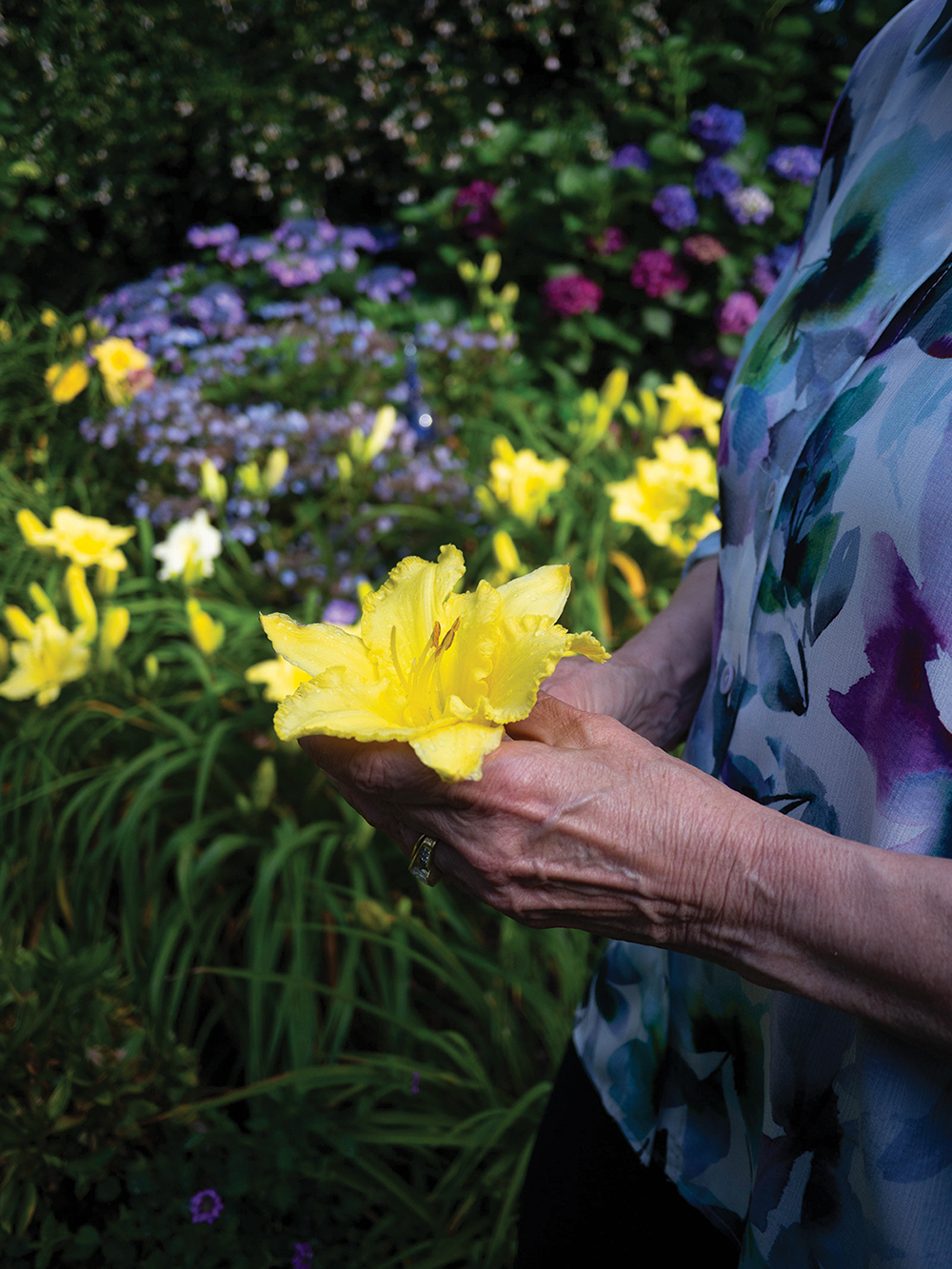
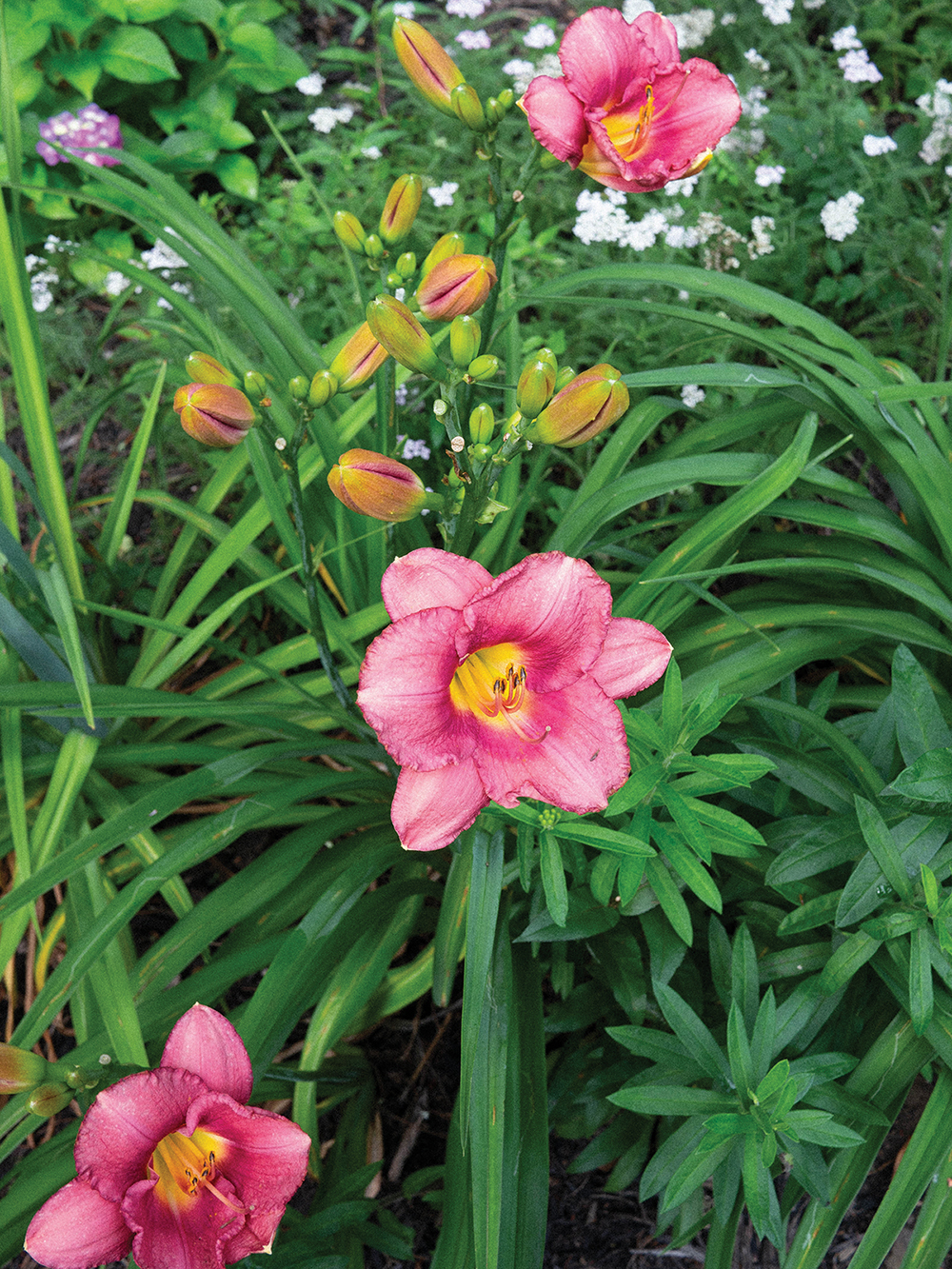
Buettner guesses she has more than 125 varieties of daylilies. “Some are tall, some short, and some are double-petal varieties.” Most are pastels, in shades of yellow, pink, purple, lavender, and white, “with a few reds set aside in a corner.”
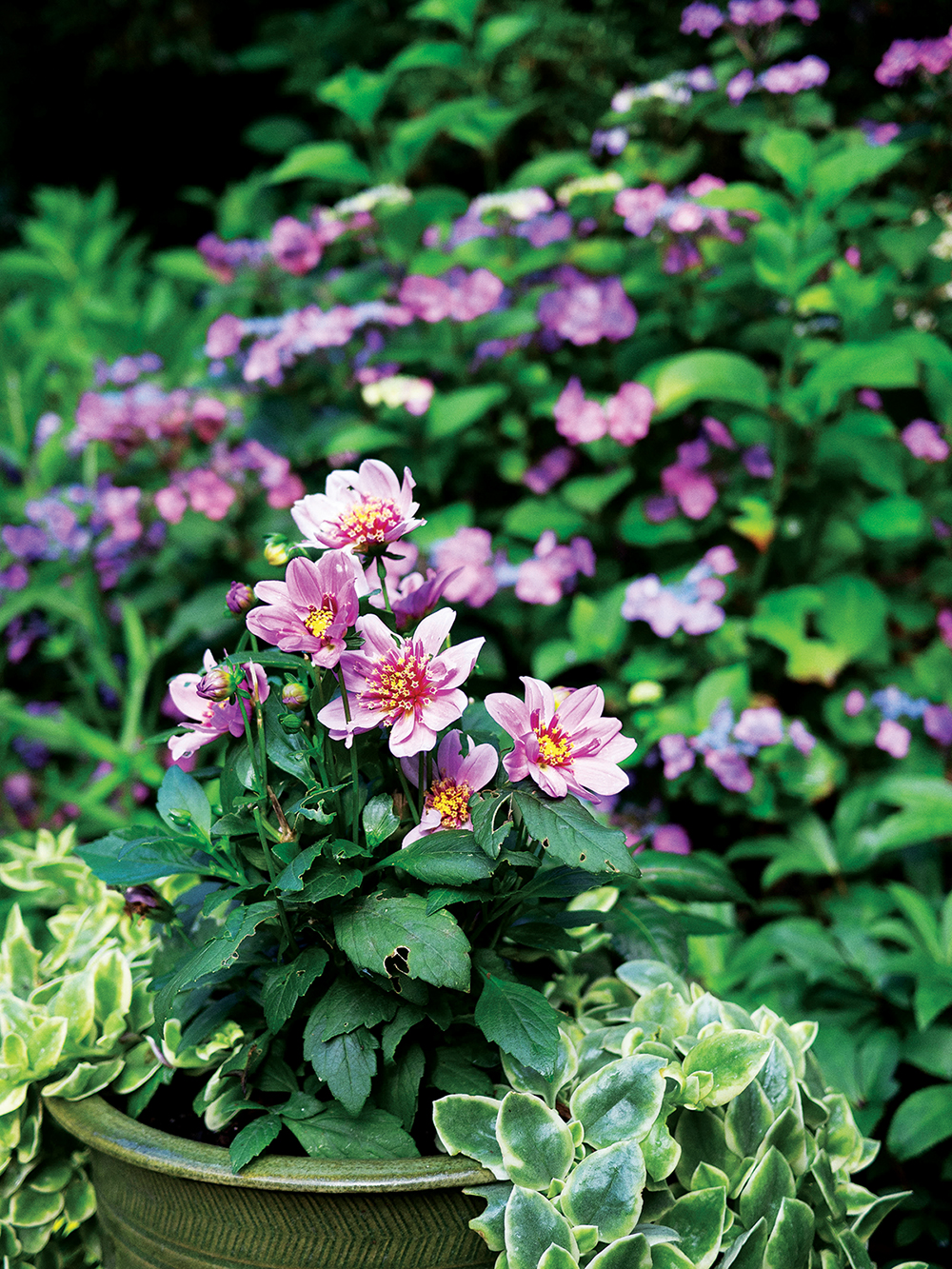
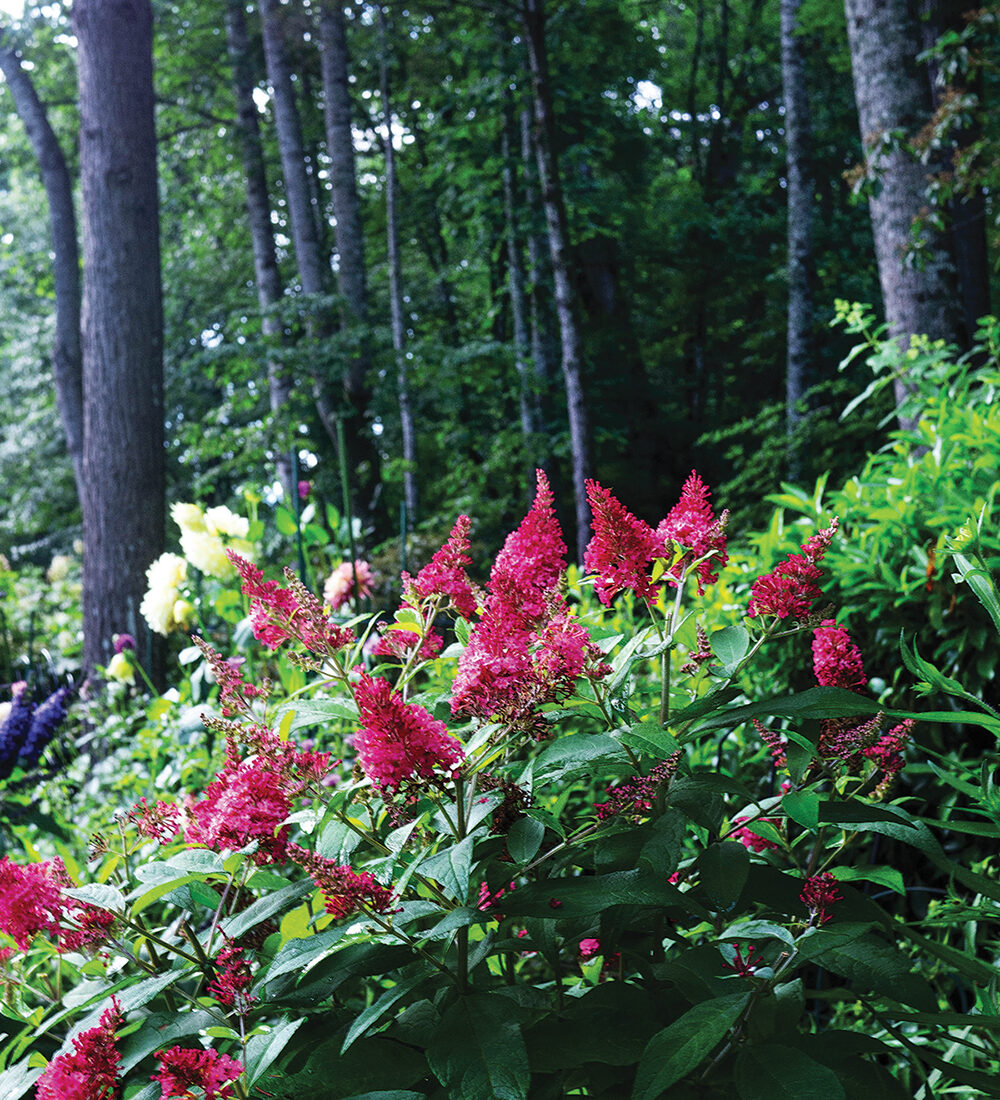
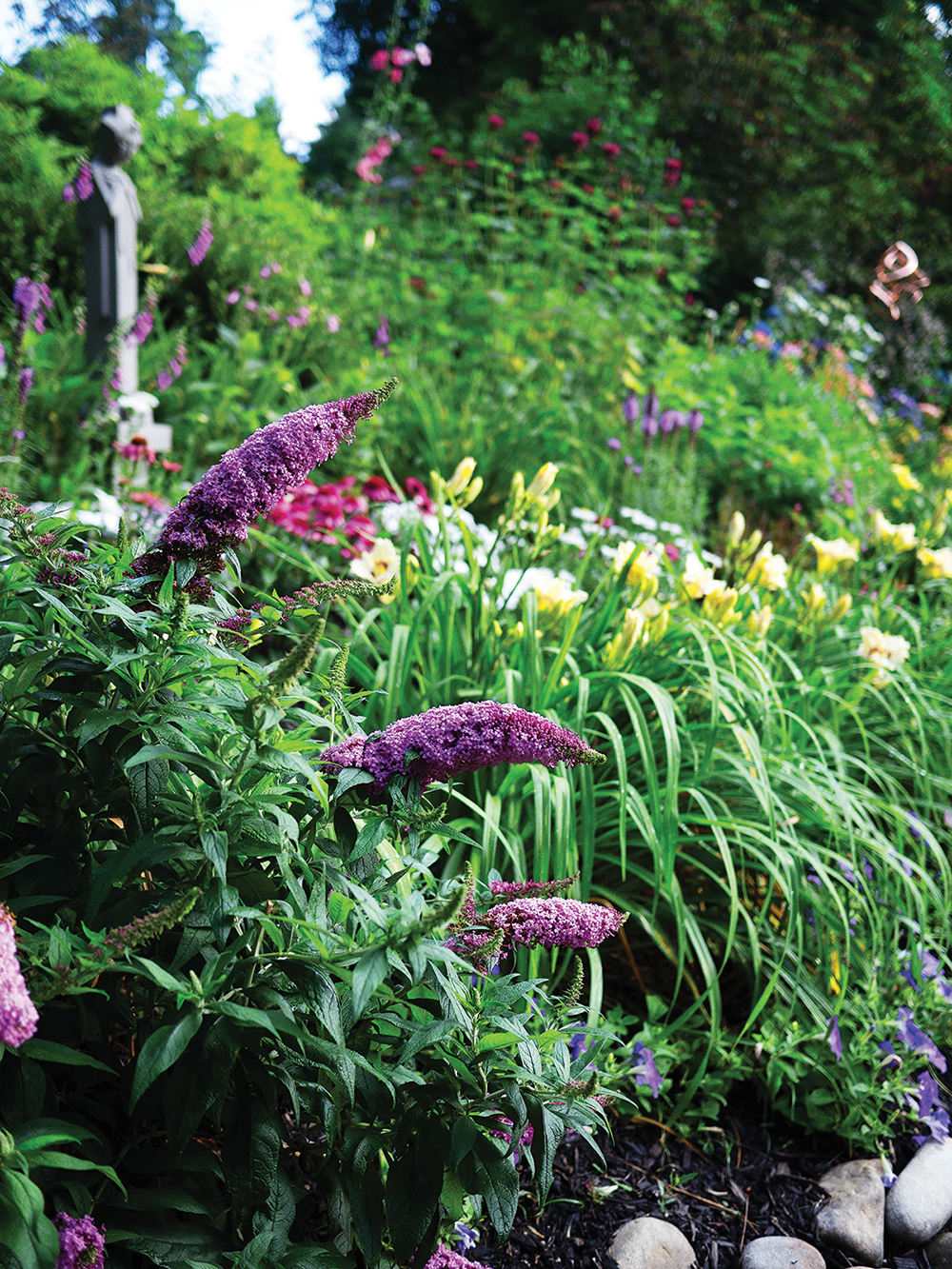
The semi-wooded community, which also includes a small pond, enhances the effect, and while Buettner underplays her own choreography, her intention shows through not only in the sheer variety of flora but also in the recent inclusion of pollinator-friendly plants and in the hardscaping, including fluidly meandering rock paths. She credits Raymond’s Garden Center, mentors Brenda Rosbrook and Kay Campbell, and Master Gardener classes that enriched her knowledge over the quarter-century-plus that she’s been growing her vibrant oasis in Henderson County.
It’s been a lot of hard work, she admits. “And I’ve loved the challenge. Over the years, God’s garden has seen many changes.”