
Owner of backyard nursery dispels bonsai-growing myths

Billy Schweig, pictured in his nursery in late fall, objects to the idea that it takes decades to achieve a good bonsai specimen.
Portrait by Rachel Pressley
Like many other bonsai enthusiasts, Asheville’s Billy Schweig was frustrated by the lack of available quality starter plants and variety of species at affordable prices. So in 2023, while maintaining his day job at an environmental nonprofit, he launched Appalachian Plantworks as a side gig. The small, backyard, NC-certified nursery now sells about 2,000 trees a year — ranging from seedlings up to pre-bonsai stock — as well as ceramic bonsai pots. Schweig ships pots throughout the continental United States year round, and plant material seasonally beginning in March.
Tell Carolina Home + Garden about your journey into bonsai.
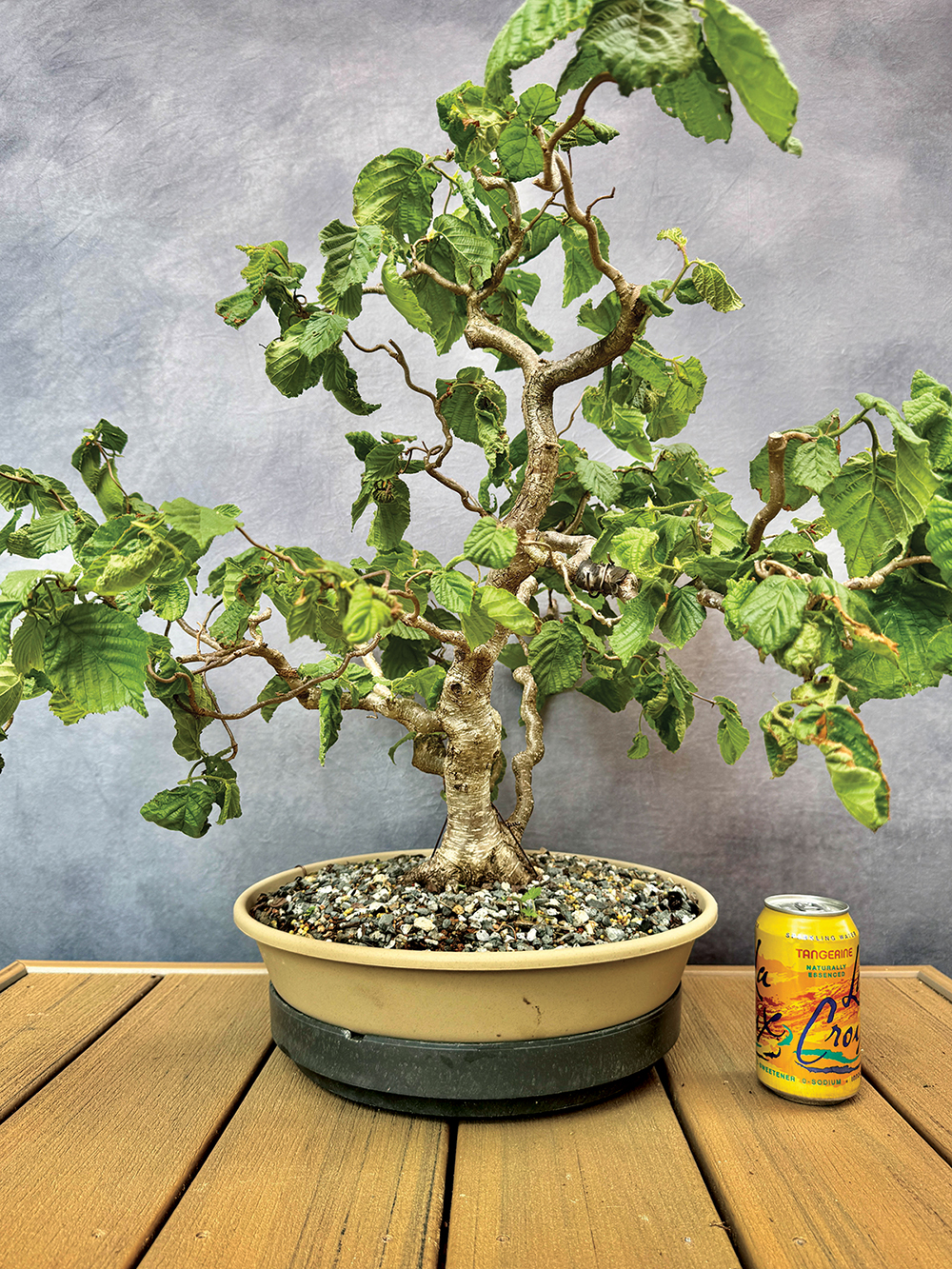
Bonsai came to me kind of randomly. I have a buddy who has been at it for maybe 15 years, and I would see his bonsai trees and think they were really cool. Then in 2017 I was living in this apartment complex where a honeysuckle vine was growing out of a stone wall. The landscapers kept cutting it back and as it responded to the damage over time it developed a gnarly, twisted form I liked. So I planted it in a pot and it looked good enough that my obsession grew from there.
Actual bonsai techniques, though, can be difficult to master…
I’m still learning, and I’m an amateur by most standards, not a bonsai expert by any means. I’ve done a lot of reading, watched bonsai channels on YouTube, and picked up tips from others. I encourage anyone interested in bonsai to do the same. Definitely join a local bonsai club like the one we have in Asheville [Blue Ridge Bonsai Society], and eventually find a mentor. For inspiration, visit the North Carolina Arboretum’s Bonsai Exhibition Garden. [The world-renowned collection of native bonsai has been curated for decades by Arthur Joura, a highly influential bonsai artist.]
Doesn’t growing a bonsai tree take a long-time commitment, kind of like investing in a retirement account?
I would love to offer a different perspective. Sure, a show-worthy, finished tree that could compete on a national level may take a decade or two, but you can often get a very satisfying tree with three years of work. To me, those early years are the most fun and active part, while you’re training and developing the tree, doing the initial design.
What common mistakes should newcomers avoid?
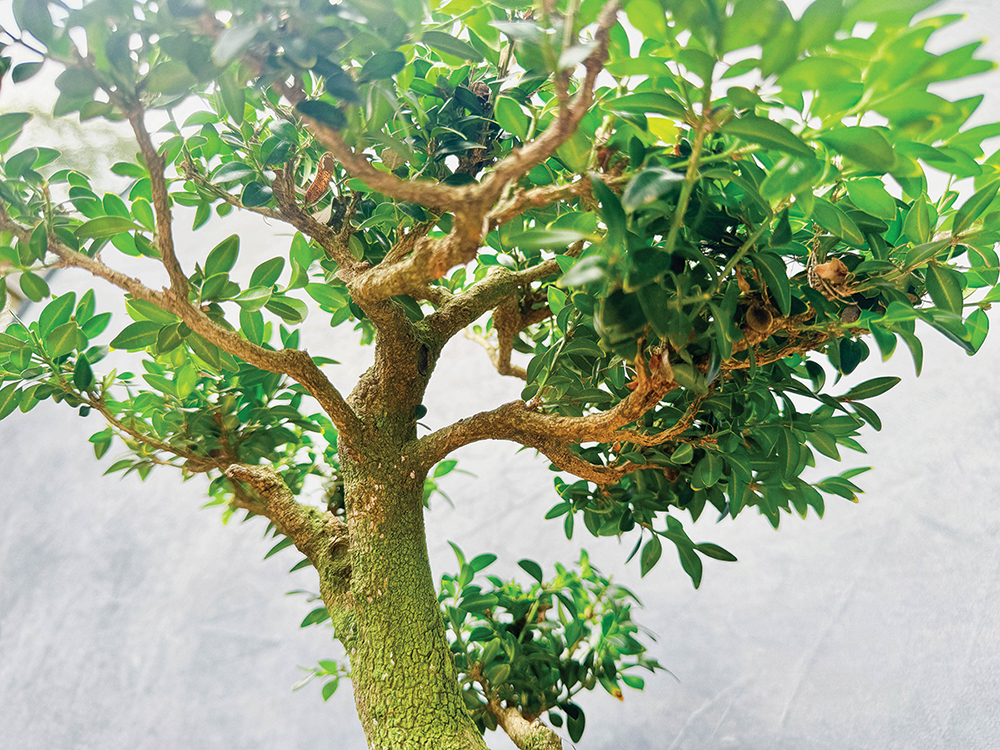
Growing your first bonsai from seed. It will be years before you’re actually able to apply any bonsai techniques to it. And don’t buy a super-expensive tree for your first bonsai, either. Twenty-five to 100 dollars is a good price point for beginner trees. That way you can get one that’s a couple of years old with some options for developing, but not so expensive that it crushes you if you kill it.
Don’t be afraid to fail, or that you’ll ruin or kill your tree. Experimentation is an important part of the process, and if you lose a tree, you can learn a lot about what not to do. I also recommend that you don’t start with just one tree. Get three, four, or five. Constantly futzing with just one tree means you can love it to death.
In other words, don’t be a bonsai “helicopter parent?”
Right. Beginners often want to get in there and work on it constantly, but pruning it is removing its solar panels, and it takes time for the tree to recover from that. It may only need wiring or pruning once or twice a year, and if you do it more than that you can kill it.
Also keep in mind that most bonsai books are about the refinement phase. Beginners reading those may try to apply late-stage techniques meant to slow down growth, when they should be doing the opposite — performing structural and early development work and thickening the trunk. Don’t try to use intermediate or advanced techniques before simply learning what the tree needs to survive and thrive. For instance, a lot of beginners put their tree in a small ceramic pot hoping to grow it out. But undersizing the pot thwarts growth, and trunks rarely grow mass once you put them in a smaller pot. Get a larger ceramic pot or a plastic training pot for the development phase.
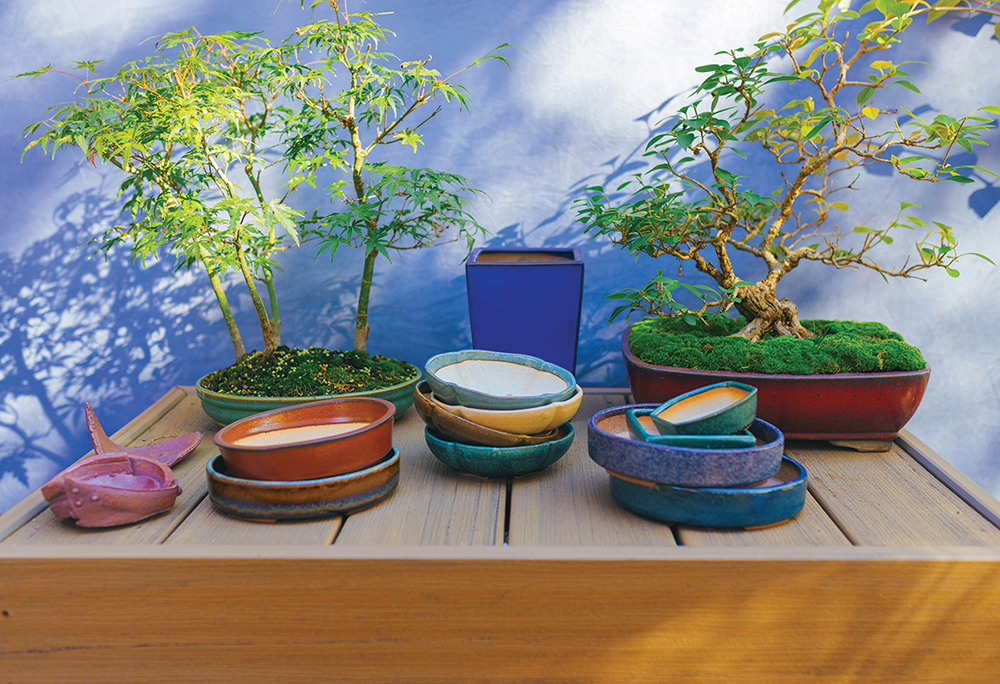
Photo by Rachel Pressley
Vigorous, disease-resistant trees suited for your environment and climate zone. Like regular non-grafted green-leaf Japanese maple, azaleas, Chinese elm, Amur or Trident maple, Shimpaku or Procumbens juniper, and Japanese Snowbell. Also look for common species in unlikely places. If you see a neighbor dig up boxwood, yew, or azalea hedges, ask if you can have them. Or you may find something like a discounted flowering cherry or Japanese pine with broken twigs at a garden-center sale.
Don’t let perfect be the enemy of good. Bonsai material is more prevalent than people think, and your job is to find something that works and have fun.
Appalachian Plantworks, Asheville, appalachianplantworks.com, on Facebook (Appalachian Plantworks), and on Instagram @appplantworks. E-mail Billy Schweig at billy@appalachianplantworks.com for more information. (Also see blueridgebonsaisociety.com).