
Lesser-known evergreens round out the landscape
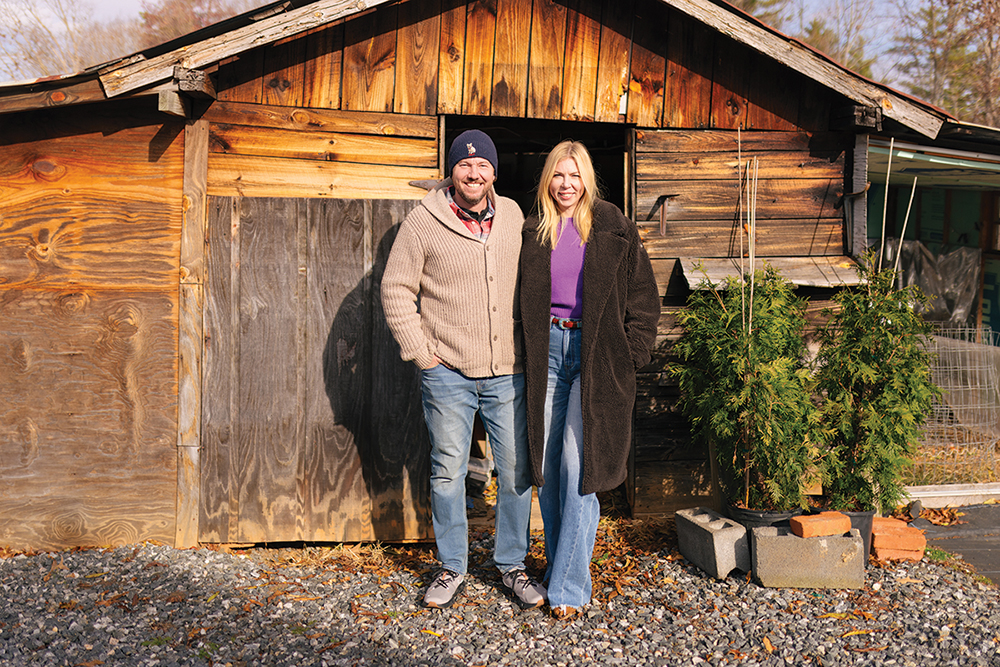
Photo by Rachel Pressley
To look at Ryan Brower now, smiling ear to ear beside his wife Sarah Macrae Brower and their two adorable pugs, surrounded by the plants, shrubs, and trees they sell at Flat Creek Plant Farm, you’d never guess the nursery was his first step to recovery from years of severe alcohol abuse.
It’s not as though he had a youth steeped in family gardens. Ryan has vague memories of his grandmother growing things, but as a child growing up in a single-parent, financially insecure household in Florida, and then later leading the peripatetic life of a chef, he had neither the time nor inclination to get his hands in the dirt.
He arrived in Asheville in 2006, went from kitchen to kitchen, bought a 100-year-old house on a piece of land in Weaverville and went into catering. He took his last drink at 6am on December 31, 2018. A few days later, with the catering season done, he went down to his low-ceilinged, dark basement, hooked up some grow lights, and planted some vegetable seedlings.
“I had a good piece of land, and I knew I had to stay busy to keep my mind off drinking,” he explains. “There are similarities to cooking and growing food — you start with raw ingredients and make something out of it. I had a lot to learn.”
Primarily he had to figure out how to grow anything in the red clay so predominant in the region, and he admits he killed lots of plants on his way to success. He turned to an online forum called Mike’s Backyard Nursery for tutorials and networking.
By March 2020, Ryan had set up a lean-to shed, some hoop houses, things to sell, and a name. “I called it a plant farm and not a nursery because I wanted to be a farmer,” he explains. “I started out doing a lot of woody-plant propagation in mist beds. We realized after a few seasons that you really need more land to grow plants all the way from cuttings. The dream is to someday get back to that, though.”
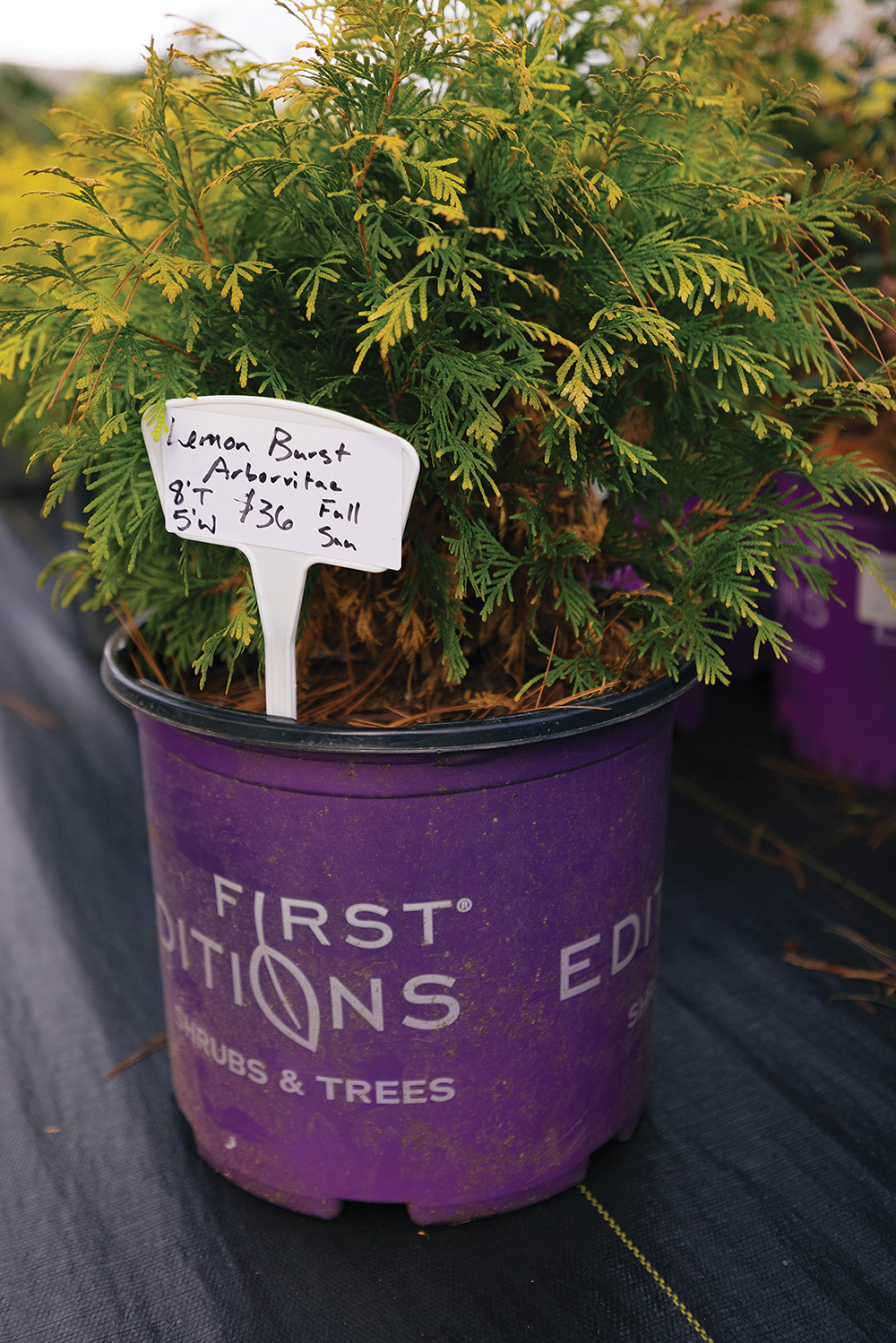
Currently, the Browers specialize in evergreens, particularly arborvitae.
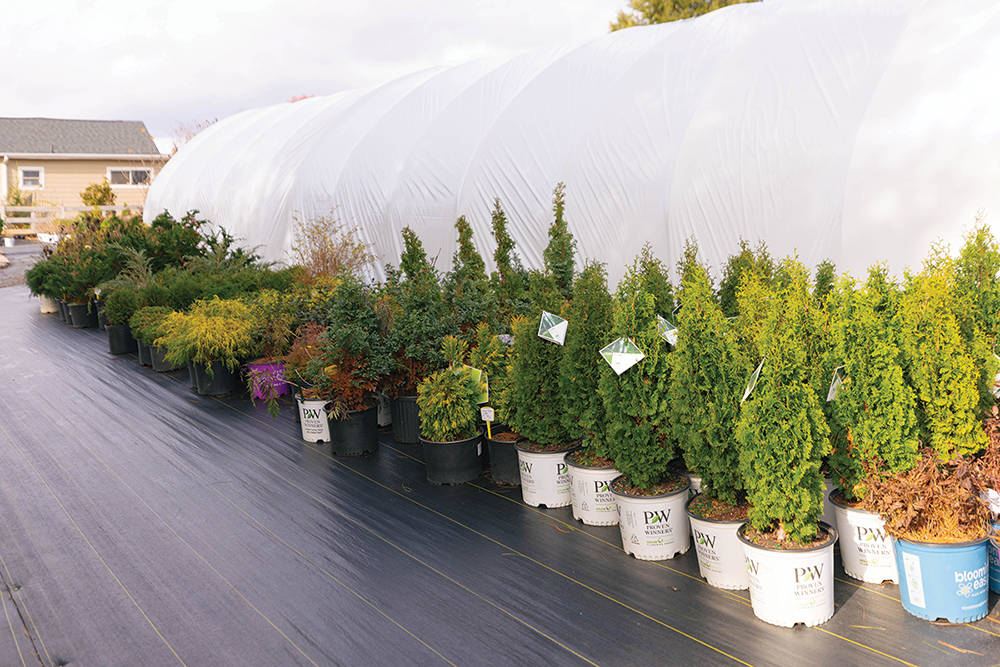
Photo by Rachel Pressley
What drew you to evergreens and why?
The customers I love to help are the ones who are developing their whole landscape, and to me, the backbone of that is evergreens. I think of evergreens as the blue jeans or the little black dress of the landscape. If you have a really nice selection of them, they look good all year round. You can’t say that with flowering things like perennials or annuals. If you do nothing else in your yard, evergreens are enough.
What is an arborvitae?
Arborvitae means “tree of life,” but it’s a type of native evergreen, and the best kind for our area. There are Eastern and Western arborvitae; most of ours are grown locally — versus being shipped in — which is one of the best signs they will thrive for us in the Southeast.
Photo by Rachel Pressley
How do you use evergreens in landscaping?
Screening trees are a big thing, and most people think of “Green Giants” or “Emerald Greens” for that, even if they don’t know the name. “Green Giants” are very fast growing and can get to 40- to 50-feet tall and about 12 feet wide. You really need to plan for the future with those! Most come in a 3-gallon container and are about 4 feet tall. Give them full sun and fertilizer and they’ll grow one to two feet the first year; once they’re established, they’ll grow two to four feet a year.
Is there a smaller option for screening arborvitae?
The “Emerald Greens” are slower growing and get about 10- to 15-feet tall and 4- to 5-feet wide. There are not a lot of options between the two. There is always conversation about it, and someone will eventually breed one.
What other arborvitae evergreens do you like?
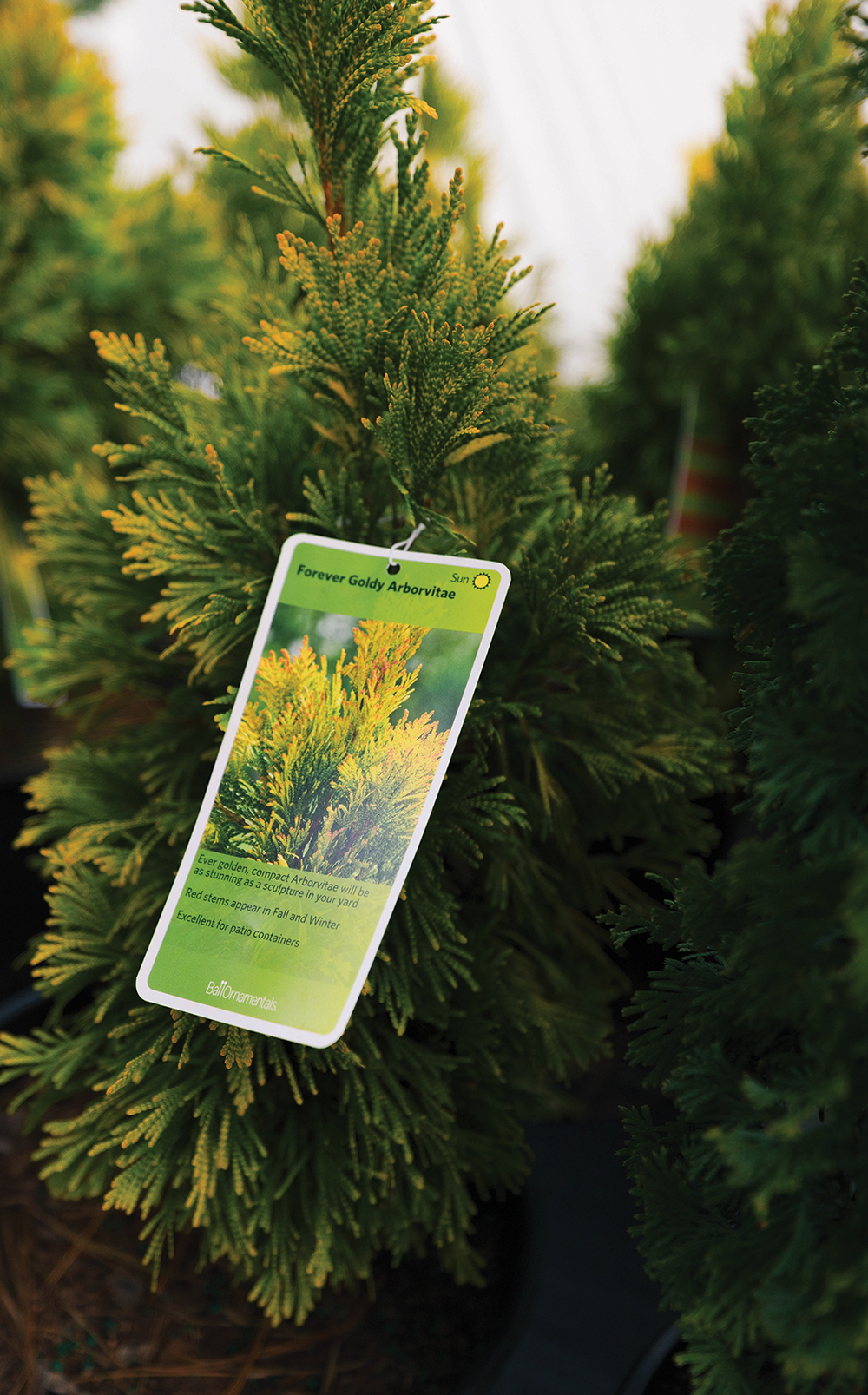
They come in all shapes and sizes. You can do the “Polar Gold” for some color on the border, or “Fire Chief.” “Anna’s Magic Ball” is round, about 2 feet around and gives lots of options. “Mr. Bowling Ball” also stays small and has a nice blue-silver hue to it.
When do people plant evergreens?
Spring is our busiest time, helping people design their landscapes starting with evergreens and flowering shrubs.
What’s your best advice for healthy evergreens?
Manage the clay first, which means get your hands in it, mix it up with chunky soil conditioner in a wheelbarrow, and then put it back before you plant. Dig wider, not deeper than the pot. Overwatering kills more things than underwatering. Find a watering schedule that works and stick to it.
Flat Creek Plant Farm, 125 Restful Way, Weaverville, opens for the season March 1, see flatcreekplantfarm.com