
River Arts District painter captures flowers past their peak

Photo by Colby Rabon
There is a moment in every flower’s life when it stops trying to impress. The petals loosen, the stems bend toward the earth, and the blooms begin to bruise at the edges. What once felt polished becomes softer, stranger, and, to Asheville painter Ani Kinyon, more compelling.
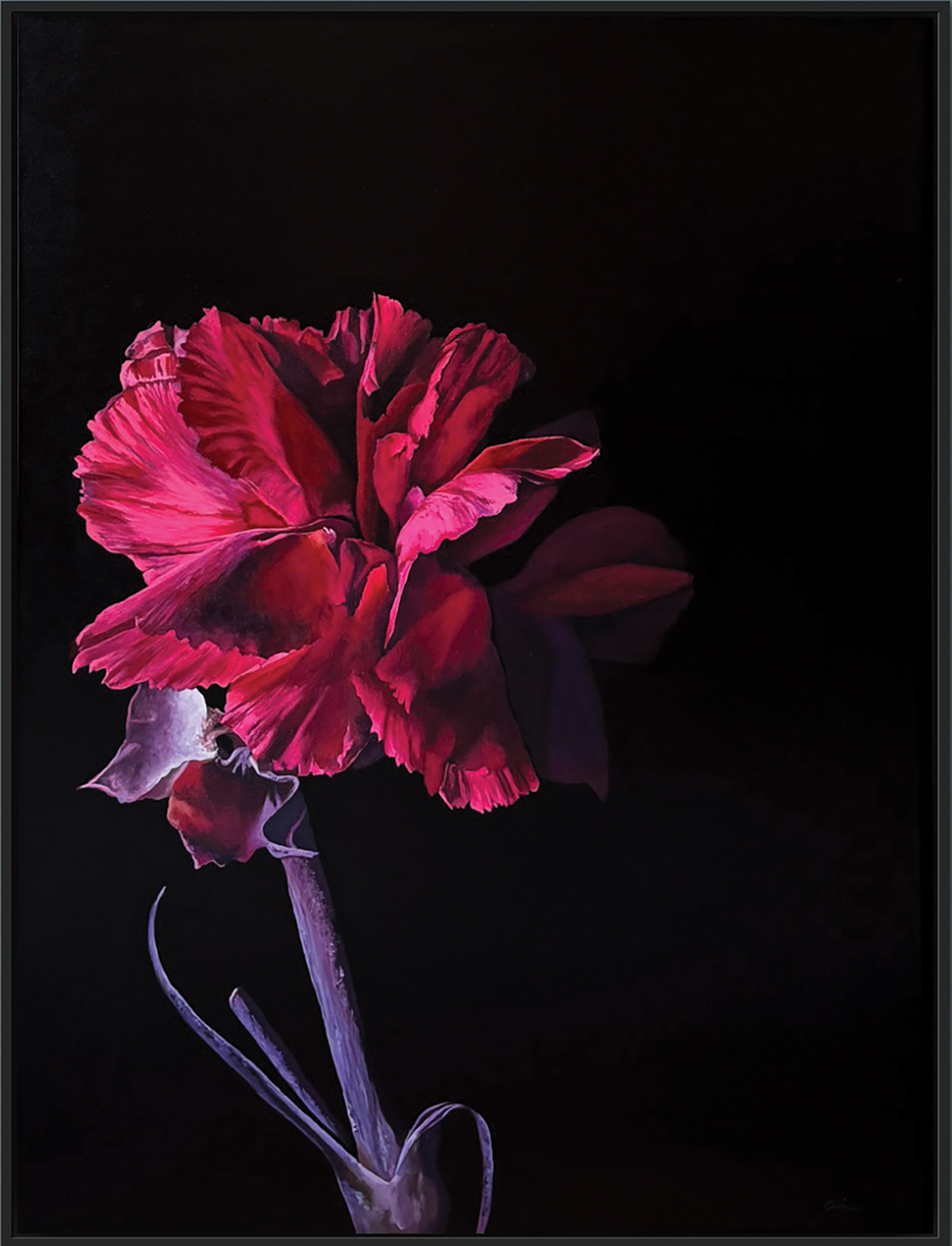
In her “Fading Floral” series, Kinyon captures blooms in that liminal space of ripening and unraveling. Painted against moody backdrops in luminous oils, the flowers feel suspended somewhere between vitality and decay. The works explore beauty not as perfection, but as transformation.
“As the flowers age, their colors change and the petals become crunchy and crinkly, almost sculptural,” Kinyon says. “They become beautiful in completely different ways.”
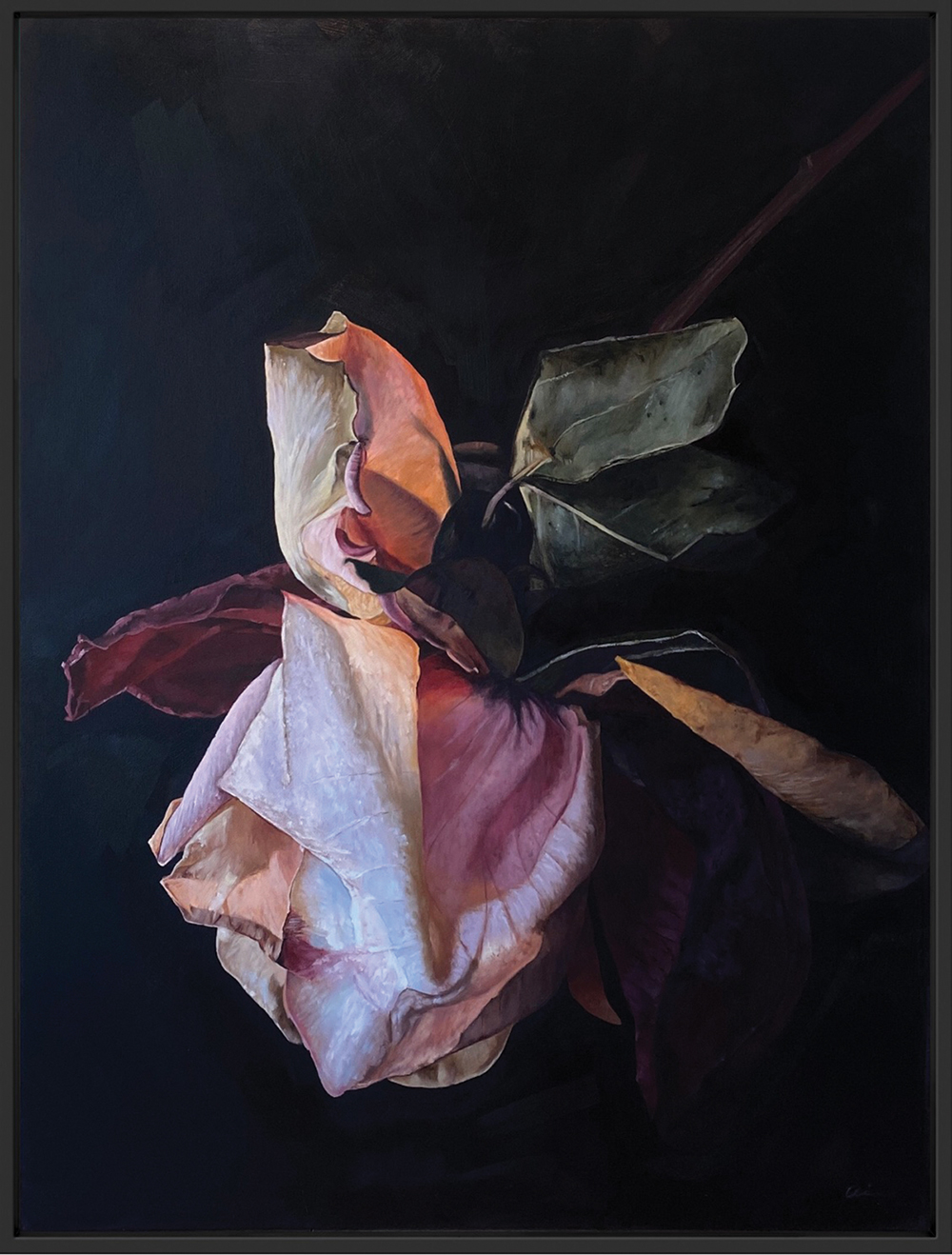
Kinyon’s floral fascination first took root nearly a decade ago while she was living in New Orleans, when a friend sent her a bouquet. Every morning, the arrangement looked different. Some snapdragon blossoms collapsed inward while the roses unfurled wider, their colors darkening into wine reds, burnished golds, and dusky violets. Kinyon found herself documenting each subtle shift before eventually translating the images into paint.
The resulting series is less about botanicals and more about the quiet metamorphoses that happen with time — the ways people, like flowers, continue changing long after their so-called peak.
“It all feels like a metaphor for aging,” Kinyon says.
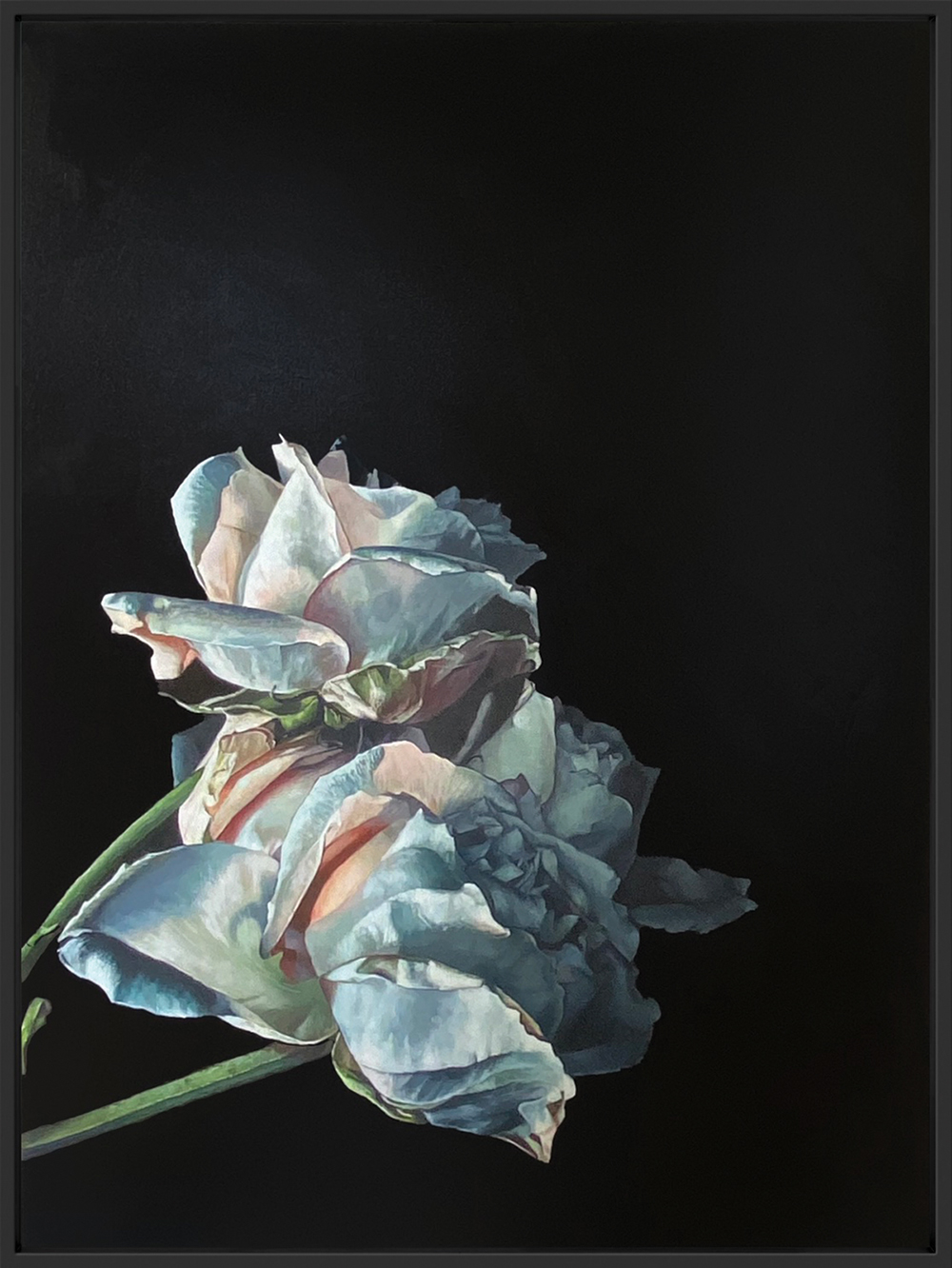
That idea of evolving beyond perfection resonates deeply with the artist’s own creative journey. Today, she paints from her studio in North Asheville and shows work through Bottinelli Fine Art in the River Arts District, though her path here was far from direct.
Growing up, Kinyon spent summers near Chicago with her grandmother, an art and music teacher who first introduced her to watercolor painting at the kitchen table.
“She would put watercolors out for me, and I would just paint,” Kinyon recalls. “Making art has been part of my life for a really, really long time.”
Still, art never felt like a realistic career option. Kinyon’s father, an engineer, encouraged her toward a more stable path, convinced she would always be able to find work in a technical field. So when she enrolled at the University of Utah, she entered as an engineering major instead.
It did not take long for her to realize she felt completely out of place. Surrounded by formulas, calculations, and rigid systems, Kinyon found herself envying the students in the architecture and art departments. Eventually, she stepped away from engineering, graduating with a degree in mathematics.
After college, Kinyon moved through various careers, including a stint in the film industry in Los Angeles as a location manager. While scouting sites for directors, she became captivated by weathered machinery, forgotten objects, and old industrial equipment sitting quietly in fields or tucked behind buildings. She began photographing the scenes and painting them in her spare time, eventually developing the hyperrealistic acrylic works that defined much of her early artistic career.
“Art was always there, and it just kind of slowly seeped back in more and more until it found me again,” Kinyon says.
In her late twenties, Kinyon finally committed to painting professionally after encouragement from her now husband, Randy.
“He believed in me enough to say, ‘Just paint. See what happens,’” Kinyon says. “That was my blessing.”
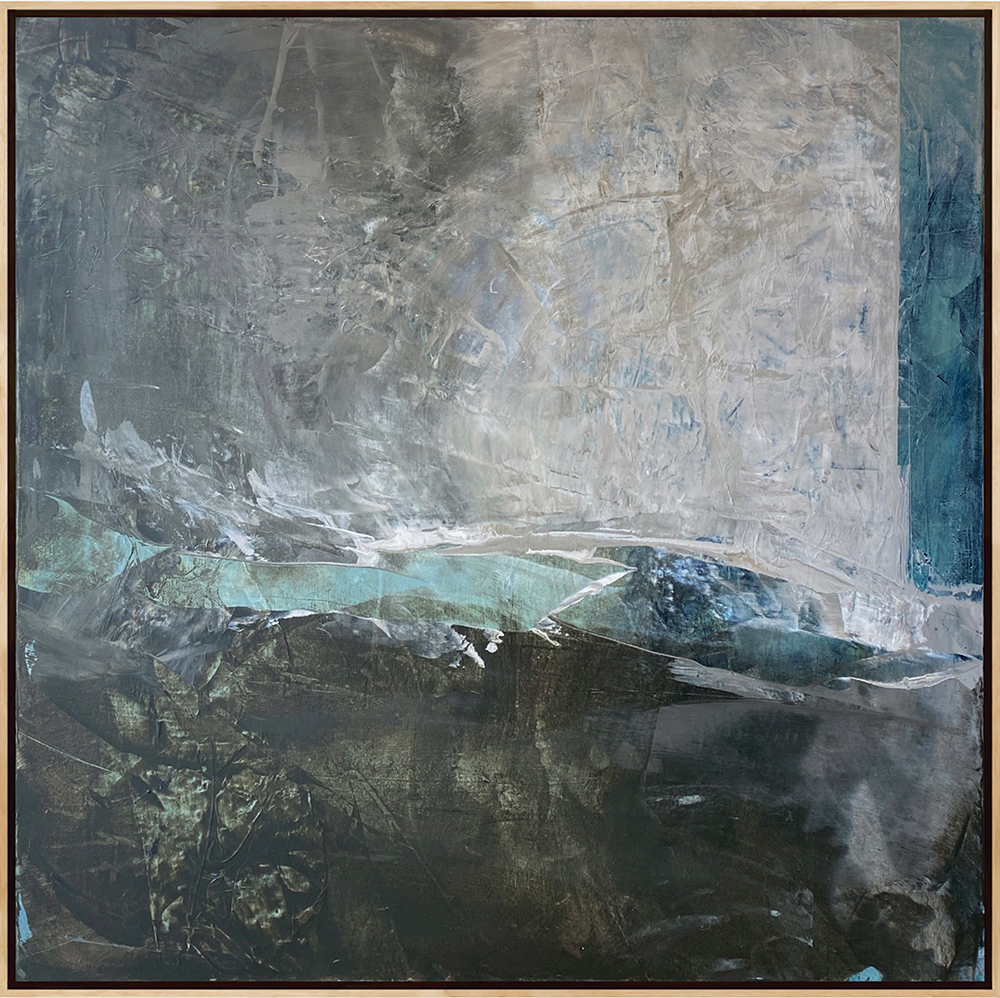
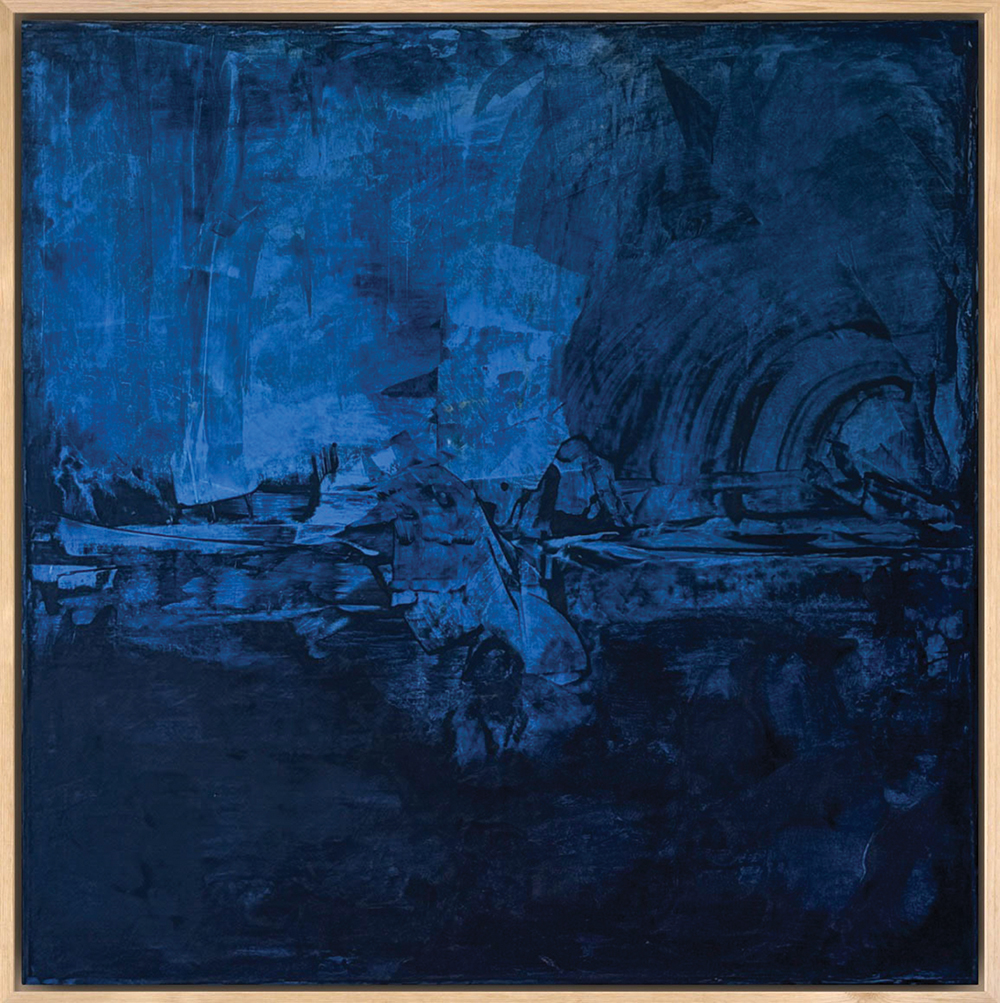
In recent years, Kinyon’s work has begun to loosen, both technically and emotionally. Though she still paints representational florals, she has increasingly embraced abstraction and intuition within her practice, creating pieces inspired less by precise observation and more by atmosphere, emotion, and movement.
Kinyon says the shift reminds her of a Pablo Picasso exhibition she saw years ago that traced the artist’s evolution over time. His early drawings were highly realistic and detailed, she recalls, but gradually evolved into the abstracted forms he later became known for.
“At some point, as a creator, you stop trying to replicate exactly what you see and start trying to create something wholly new,” she says.
Nature often serves as the spark for these abstract paintings: the shimmer of light across water, the palette of a darkening sky, or the subtle colors hidden inside a shadow. Instead of rendering those moments literally, Kinyon focuses on evoking feeling — creating work viewers experience emotionally before they fully understand it intellectually.
“I’m tending toward work now that you feel your way through instead of think your way through,” Kinyon says. “If people feel something when they look at my paintings, I think I’ve done something right.”
Ani Kinyon, Asheville, ahkdesigncreate.com, and on Instagram @ahk.design.create. Kinyon’s work is represented by Bottinelli Fine Art (146 Roberts St. in the Wyre Building, Suite #106, River Arts District, Asheville, bottinellifineart.com) and also by Anne Neilson Fine Art in Charlotte.