Why ginkgos might boast the ultimate autumn foliage
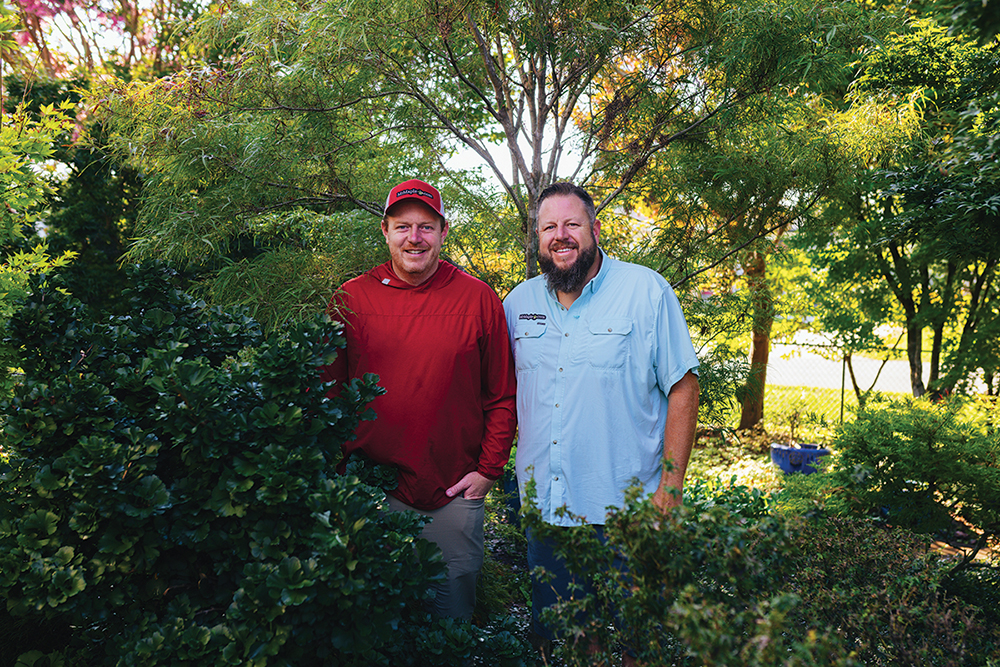
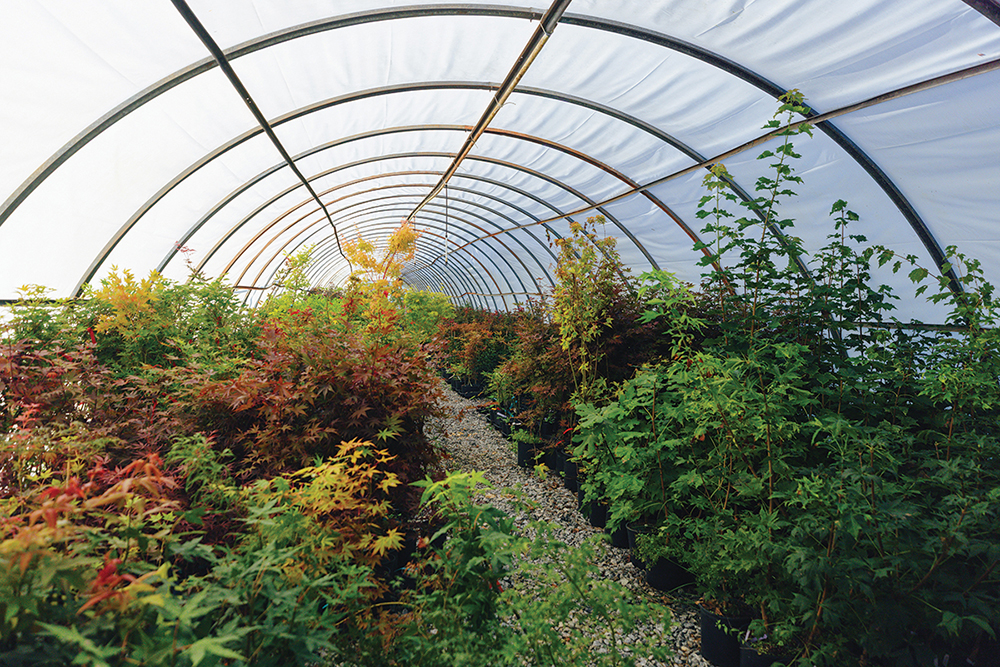
Brothers Tim (left) and Matt Nichols branded their business around ornamental maples (seen in greenhouse page 52), but the ancient ginkgo, lower left on this page, is another specialty.
Photo by Rachel Pressley
When Tim Nichols was a student at UNC in Chapel Hill, every autumn he’d notice a brilliant tree on campus. It wasn’t the mixture of orangey-reds that distinguishes typical fall foliage — these leaves glowed with a uniform inner light. “It was simply amazing,” Nichols recalls. “An electric yellow.” He later learned the tree was the common ginkgo cultivar called “Autumn Gold.”
Now, a few decades later, and even though the family nursery Tim and his brother Matt rebranded is called Mr. Maple — where they sell more than 1,000 cultivars of Japanese maple trees — Nichols’ initial love of ginkgos has again taken root.
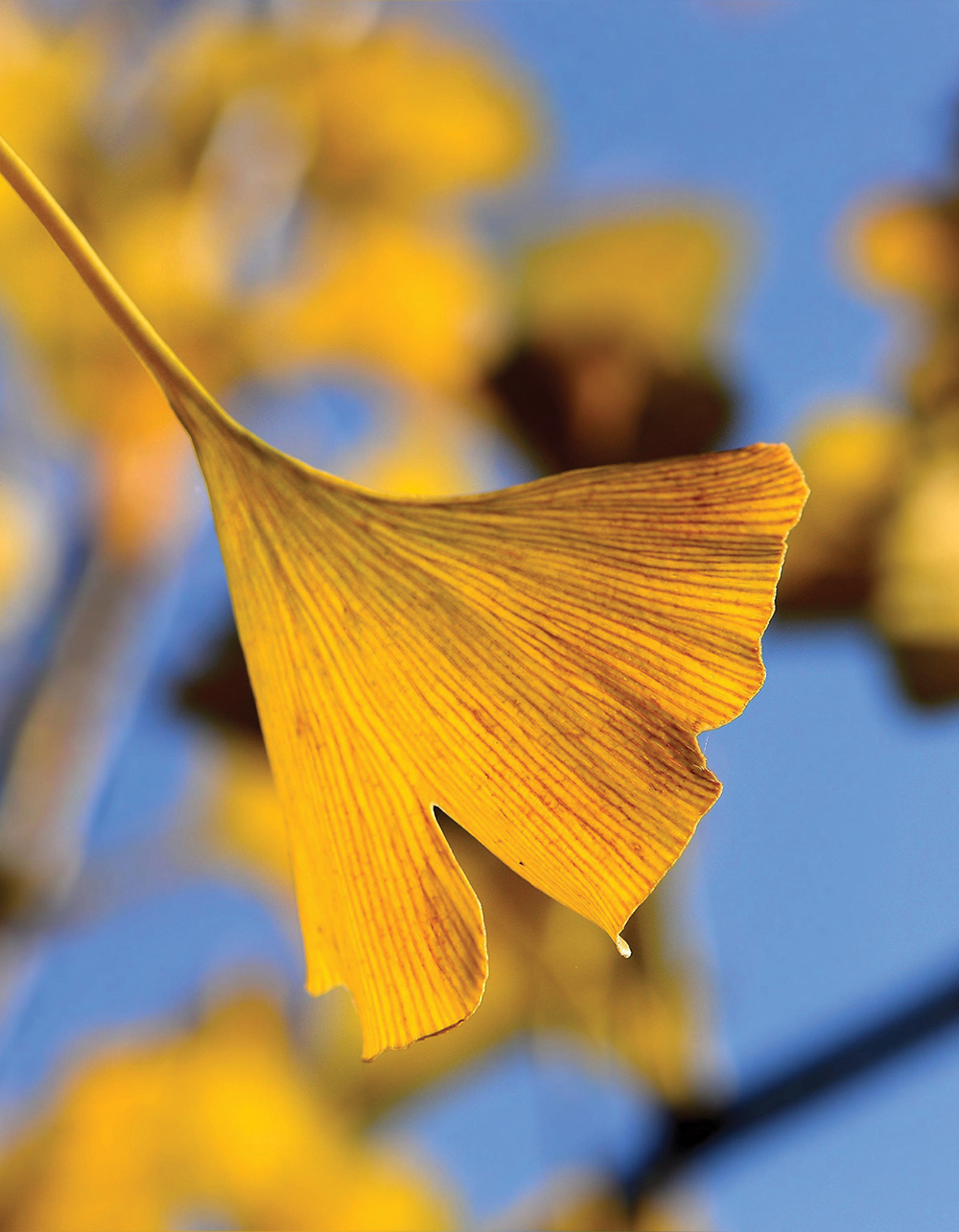
The brothers are regional and national experts on ornamental maples, but, as Nichols says, ginkgos “can really complement Japanese maples well. Japanese maples are known for orange and red fall color, while ginkgos turn that school-bus yellow that stands out from everything else in the fall. It makes them quite captivating.”
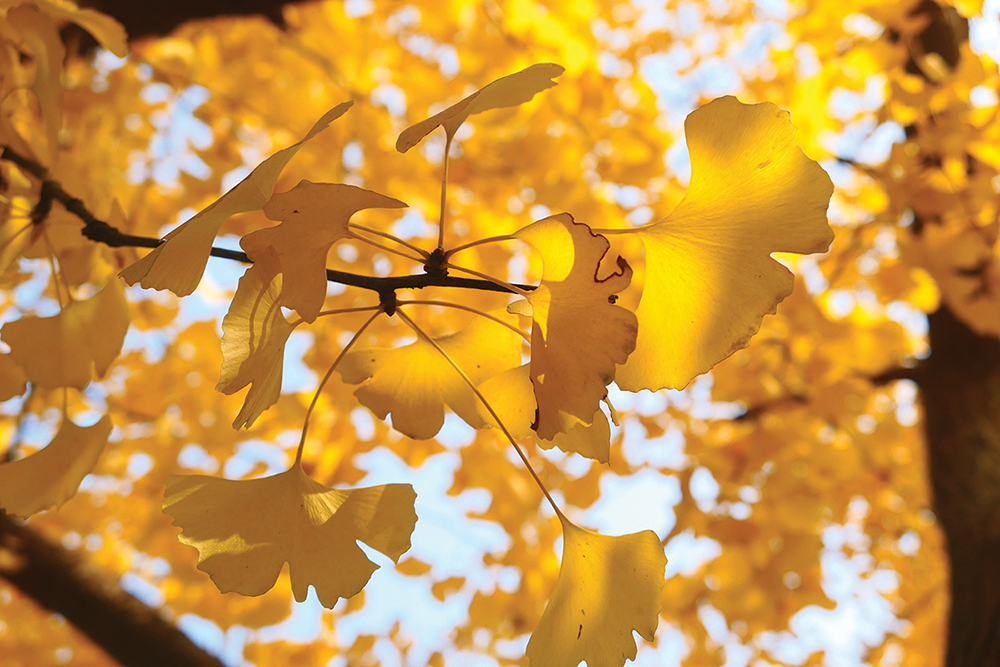
The trees are famous for their hardiness and tolerance for extremes of soil salinity, temperature, sun exposure, and airborne pollutants — all qualities that explain their popularity in urban landscaping. They tend to get their fall color later, after a hard freeze — sometimes in late October or even early November in Western North Carolina — and are also known to drop their seasonal leaves more suddenly, seemingly all at once.
The Nichols brothers’ connection to ginkgos started 15 years ago, when Matt traveled from Flat Rock to Europe for a meeting of the International Maple Society but came back talking about the stately ginkgo trees he’d seen in European gardens. Investigations revealed that, as with Japanese maples, ginkgos included a multitude of varieties. “We started collecting seed from some street ginkgos down in Spartanburg and [began] grafting all the cultivars we could find. They come in variegated forms — dwarfs, narrow forms, small-leaf forms. The diversity is quite amazing.”
Ginkgos had been cultivated in China for thousands of years before they were first planted in the United States in the late 18th century. Thomas Jefferson planted a ginkgo at the University of Virginia that still survives. The largest living trees are estimated to be some 3,500 years old; six specimens were hardy enough to survive the bombing of Hiroshima during World War II. The wood is known for its durability and is used in craft making and even, in Japan, for making sake.
Ginkgos (technically Ginkgo biloba, with fossilized remains dating to the Middle Jurassic period 170 million years ago) feature large, distinct, fan-shaped leaves and apricot-like fruits. The Nichols’ nursery offers non-fruiting trees, since the fruits, while edible, produce a strong, unpleasant scent if not harvested. “Most people don’t want the fruit, and as with all fruit trees, if you don’t eat the fruit it gets to be a mess, and stinky,” Nichols explains.
Some of Mr. Maple’s supply of ginkgos comes from its West Coast farm in Oregon, where seed is sourced from local trees. “They’re an easy tree to grow,” Nichols says. “Ginkgos are extremely appropriate in all settings where they can get four to six hours of sunlight every day. You just have to make sure to give them lime when they’re getting established — a handful in the spring, summer, and fall for the first few years.
After that, it’s no longer needed. “I love all ginkgos. The fall colors are out of this world.”
Mr. Maple, 107 Maplewood Knoll Drive, East Flat Rock, 828-226-5684, mrmaple.com.