
September event spotlighted vernacular barns in Madison County
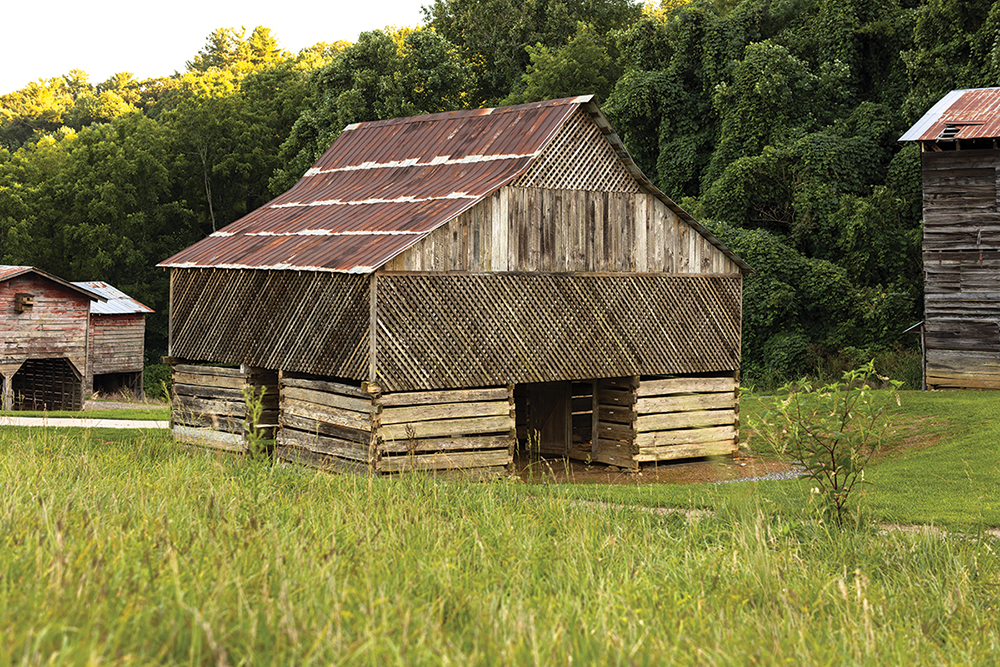
Photo by Colby Rabon
Barns are as much a part of the Appalachian landscape as hills and hollers, and that’s especially true in Madison County, where agricultural buildings are intimately woven into the history and culture of one of Western North Carolina’s most rural districts. The Appalachian Barn Alliance’s annual Barn Day earlier this fall provided an opportunity to explore the stories and legends encoded in the weathered wood and rusted nails of five historic barns at the Smith Farm at Bailey Mountain Preserve in Mars Hill. They’re among an estimated 10,000 such barns that dot the countryside, some still in use but others, built as tobacco barns, falling into disrepair with the collapse of that once-crucial cash crop.

Photo by Colby Rabon
The Smith Farm was owned and farmed by generations of the same family before being acquired by the town in 2019 as part of the Preserve. “There were three barns and a farmhouse on the eight acres of the lower Smith Farm portion,” explains Sandy Stevenson, who serves as president of the ABA, dedicated to preserving the rural agricultural heritage of Madison County. “They were built in the 1940s and 1950s. The other two were built either in the late 1800s or the early 1900s. They were donated to ABA by the owners, who are great supporters of what we’re doing in preserving the heritage.”
With fundraising events like Barn Day at Smith Farm and other ABA-sponsored tours and events throughout the year, the mission has so far documented more than 70 vernacular barns, added to a searchable database shared with Mars Hill College’s Center for Appalachian Studies and North Carolina’s Department of Cultural Resources. The project was born 15 years ago when Stevenson, then the director of the Madison County Visitor Center, and the county’s then-Extension Director Ross Young learned of an existing list of historic architecture created by Taylor Barnhill, an architect who had been working for years documenting vernacular structures for the state. Barnhill eventually became the ABA’s researcher. “He kept an extensive list and they formed the basis for the 75 or so barns that were part of our original mission — to document historic barn architectural styles and put those barns in a database,” Stevenson says.

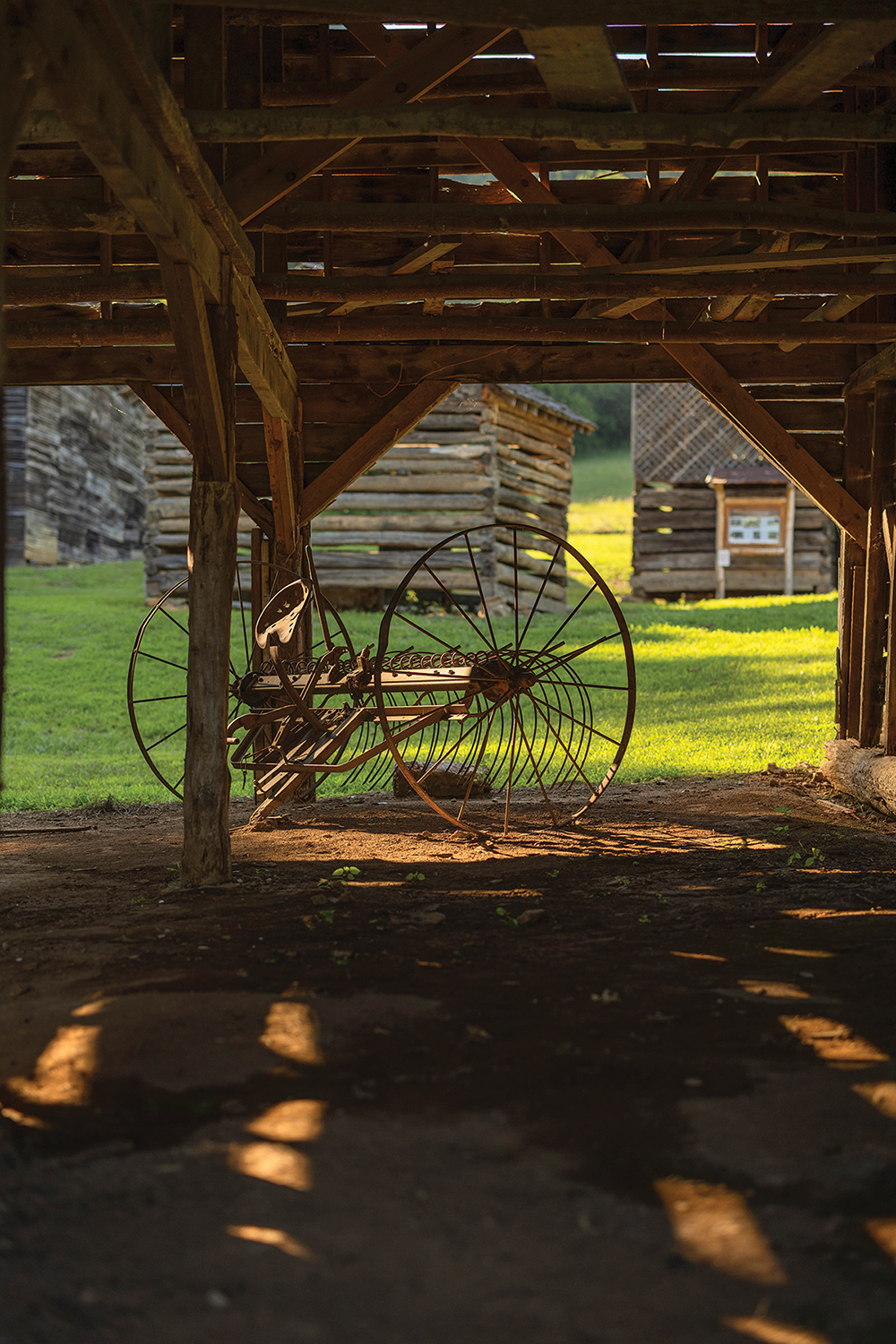
The barns at Smith Farm are prime examples of rural Appalachian farm buildings, pragmatic in design but capturing the ingenuity of a pre-industrial generation. The two older barns at the site include a flue-cured tobacco barn in which the smoke of carefully tended fires cured the leaves, and a unique lattice-work livestock barn with a loft under its peaked roof for hay storage. The three newer barns include a tobacco barn from the 1930s reflecting the change to Burley tobacco, which was air-dried rather than flue-cured. For added authenticity, the “Burley Barn” now houses a threshing machine from the early 1900s, recently donated to ABA and restored. The barns and the farm itself are rare survivors from the days of ox-drawn plows and hand-scythed hay.
While the ABA’s preservation efforts are centered on Madison County, the organization frequently offers advice to similarly minded groups outside the county. “It’s the best group of people committed to preserving our heritage,” Stevenson says. “Lots of volunteer hours — and we have a great time.”
To learn more about the Appalachian Barn Alliance’s work, events, and volunteer opportunities, visit appalachianbarns.org.