
Mysterious Arts & Crafts potter only revealed himself in art
By: Carolyn Kemmett
As a familiar face on PBS’s long-running Antiques Roadshow and the President of the American Art Pottery Association, Riley Humler lives and breathes his subject. Ceramics Specialist with Toomey & Company Auctioneers in Chicago, Humler is the industry expert on American and European art pottery, with a special expertise in Rookwood Pottery, a studio founded in Cincinnati in 1880 by Maria Longworth Nichols Storer.
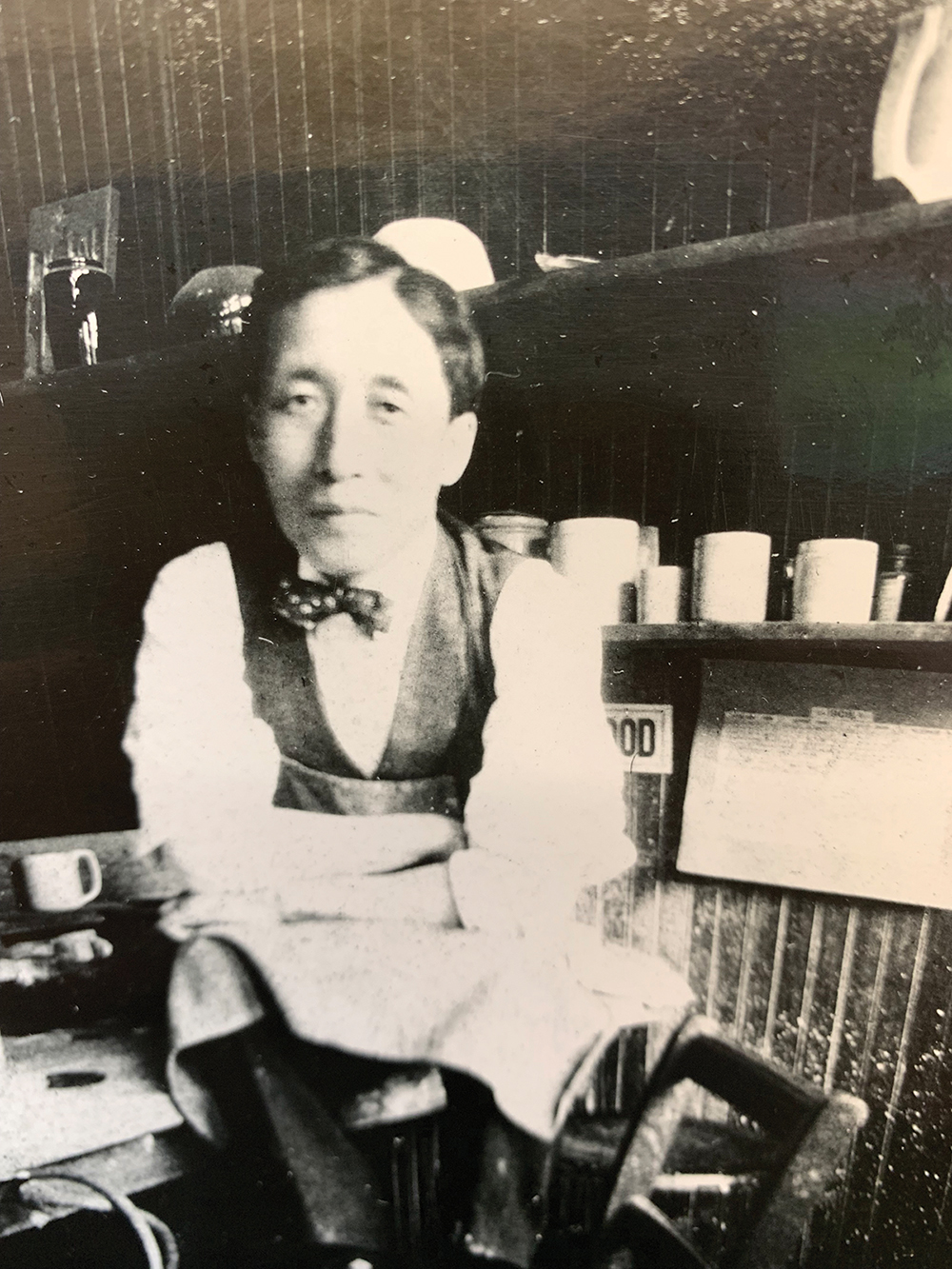
By design, he is the recognized authority on an elite but historically elusive Rookwood potter, Kataro Shirayamadani (1865-1948).
Fittingly, Humler will deliver a lecture at the National Arts & Crafts Conference titled “Kataro Shirayamadani: Rookwood’s Most Talented and Most Mysterious Artist.” His talk is one of six presentations at Asheville’s Omni Grove Park Inn. The “Arts & Crafts weekend” has long been the big event for lovers of the enduring genre — an international decorative and fine-art movement, spawned as a reaction to Victorian ostentatiousness, that prized fine craftsmanship, simplified forms, and imagery from the natural world.
Humler harbors one regret about the artist he reveres. “Rookwood and the collecting world have been misspelling his name since he arrived in this country in 1886,” he reveals. The correct spelling, long forgotten, is “Kitaro Shirayamatani,” and was likely altered by customs officials when the artist emigrated from Japan to America.
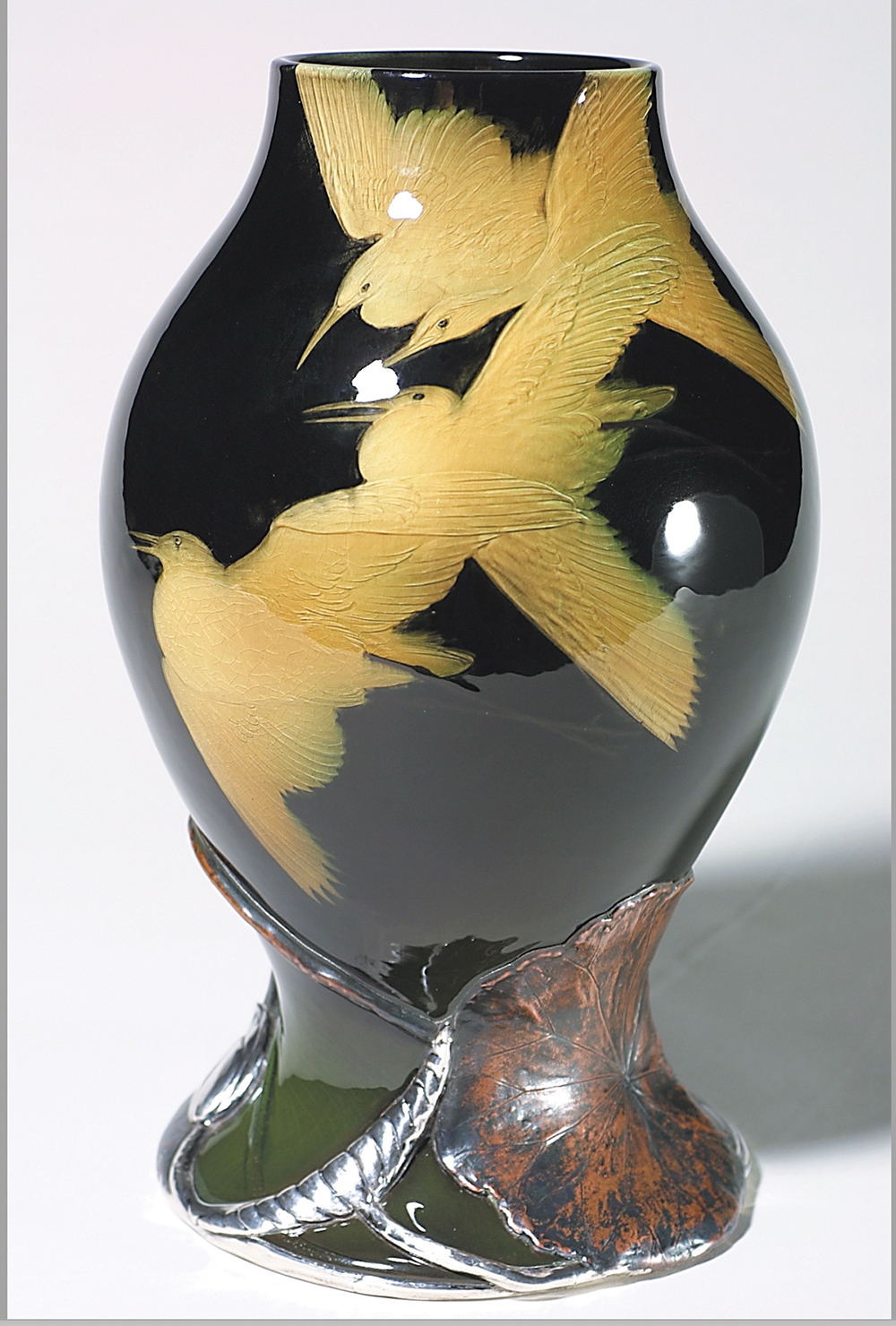
Misnomer aside, Humler affectionately refers to him as “Shiry,” and considers him to have been the most gifted artist at the long-running company — Rookwood Pottery reopened in 2004 after having been closed thirty-seven years — as well as across the entire period.
“Shirayamadani’s work is remarkable in its variety of glaze and style of decoration, and is consistently of high quality,” says the expert. (The Japanese artist worked into his seventies.) But Humler believes that some periods of Shirayamadani’s work fit into the Arts & Crafts milieu better than others. “I think his ability as a carver and decorator during the period from 1899 to about 1910 is an excellent fit,” says Humler, who mentions the distinctive matte glazes of the period.

“Vases and works by Rookwood pull in lots of attention at auction, not just due to their winning history at the World’s Fair and their timeless style, but for their innovation in ceramic design,” says Conference Director Kate Nixon. “Rookwood Pottery has truly perfected the skill of transferring fine art to a ceramic canvas.”
Indeed, it is Shirayamadani, Humler says, who created one of the most valuable pieces of American ceramics ever sold — a “Black Iris” Rookwood vase with electroplated metal overlay that went for $350,000.

Asked if Shirayamadani’s Japanese culture significantly influenced his art, Humler says no. “Most of what Shiry produced at Rookwood is consistent with what other artists did there. On occasion, you will find a dragon or Geisha, which are obviously Asian in style, but in general, his work is naturalistic and very much American.”
Little is known about Shirayamadani’s early life in Japan. Humler says the artist was intensely humble and private — adding to the air of mystery.
“He was very reticent to talk about himself, always telling reporters that his work tells his life story more adequately than words.”
The 38th National Arts & Crafts Conference happens Friday, Feb. 21 through Sunday, Feb. 23 at the Omni Grove Park Inn (290 Macon Ave., Asheville). Riley Humler presents “Kataro Shirayamadani: Rookwood’s Most Talented and Mysterious Artist” on Sunday at 9am. For information about additional presentations and conference passes, see arts-craftsconference.com.