
Art teacher implores students to put down their phones and see
According to a statistic from the Kaiser Family Foundation, the average child spends 52-and-a-half hours each week staring at televisions, computers, phones, tablets, and other devices that go beep in the night. That’s 52-and-a-half reasons why Asheville mixed-media artist Jan Widner says she’s happy to be “from a different generation.”
Technology has increased exponentially over the decades. But Widner reveals that, growing up, “we didn’t even own a television until I was 10.”

Instead, Widner spent languid summer afternoons running wild in the Sierra Nevadas of central California. It was there, amongst those 14,000-foot peaks, that she began paying attention to the color and composition of towering ponderosa pines, saffron-hued sunrises, and limitless skies.
Along with electronics, traditional art classes were also absent from Widner’s childhood. “We didn’t have [them],” she says. “But I’ve always seen art in the world around me.”
After raising her two sons, though, Widner did study art more formally, at the University of Texas at Tyler, before founding Jan’s Art Academy, an after-school art program for children ages five and up. In 1991, she relocated the school to Asheville — a more temperate locale where “you can leave the windows open in the summer.”
Today, Widner’s curriculum covers everything from pastels to papier-mâché. (She also offers open classes for adults on Friday mornings.) But the art educator is less focused on instilling technique and more focused on teaching pupils to put down their phones and truly see.
“I teach children how to appreciate the world as it is, not how they think it is,” she explains. “That’s the most fundamental skill — a skill I hope will encourage open-mindedness in all things.”
Consider a seemingly simple tree trunk. While most elementary schoolers may color the bark Crayola brown, Widner encourages her students to take a closer look — to see daubs of emerald-green moss, peek-a-boos of pale-pink lichen, and flecks of amber sap.

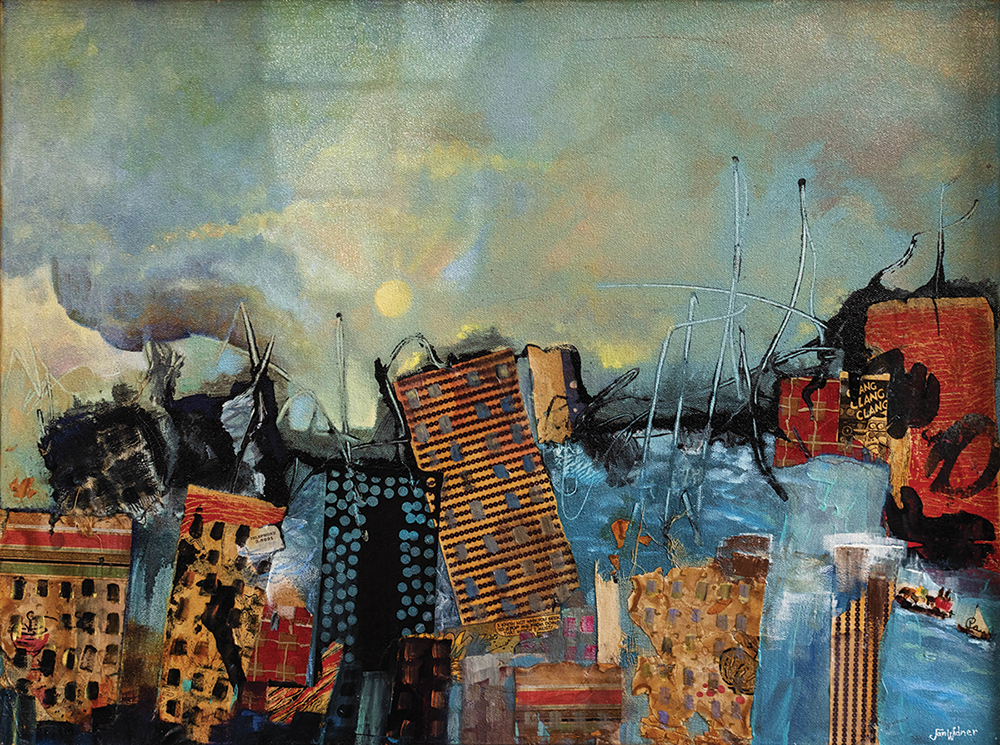
Widner applies a similar attention to detail in her own work, focusing on subtleties others may overlook. In the cityscape “Reach Higher,” she doesn’t simply paint a New York City high rise — she brings it to life, capturing small moments of humanity: houseplants in window sills, a child playing soccer, colorful graffiti on the brick facade.
In a watercolor painting titled “Asheville,” Widner depicts a similarly vibrant scene along Biltmore Avenue. In the background, a busker plays the saxophone while customers sip coffee outside of Old Europe Pastries. Meanwhile, in the foreground, a white-haired woman gazes at something out of frame, shadows dancing across her face.
“Twenty years ago, a friend gave me a photo of a stranger wearing a straw hat. The hat had holes in it, and the sun streaming through the holes cast shadows on the woman’s face,” says Widner. “I just loved those shadows, so I added it to my resource folder.”
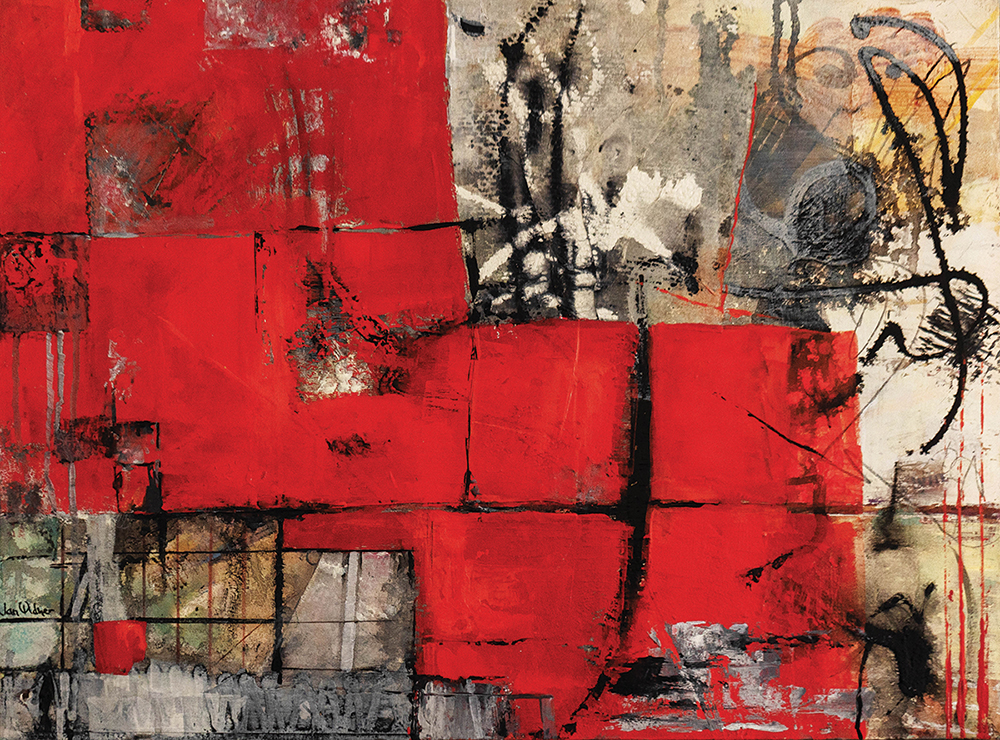
Though Widner is quite adept at capturing reality, not all of her work keeps to a representational style. Her collages are decidedly fluid compositions made from hand-painted and mono-printed paper.

Photo by Lauren Stepp
“First, I create one-of-a-kind paper, and then I tear that paper into lots of different pieces,” the artist explains. “Next, I put those pieces back together into something unique — something that can’t be replicated.”
Widner was first introduced to this process in her fifties, while pursuing her BFA. “The professor said collage would change my life,” she remembers. “And it certainly did.”
But the instructor was wrong about one thing: intention. Widner still remembers him prompting the class to approach the canvas with purpose. “He said, ‘Think about something you want to say,’” Widner recalls. “I tried, but I could think of absolutely nothing. My life is so full and deep; I carry those experiences with me in everything I do. How does one express that?”

Widner has since adopted a more spontaneous, process-focused approach.
“When I sit down to work, I don’t usually have anything in mind,” Widner says. “I just start making marks and adding color, and eventually, it will take form.”
Sometimes, Widner will pause work on a collage for weeks — months even — before realizing it needs a splash of paint here or a dash more detail there. The piece is complete when she sees a sort of visual harmony. After all, says Widner, “art is all about seeing.”
Jan Widner is offering weekly summer art camps for kids ages 8-13. Registration for Widner’s fall after-school classes (starting in September) is now open as well; see jansartacademy.com. Widner’s work is available at Re.Imagine Gallery & Studios (15 Spivey Lake Drive, Fairview, reimaginefairview.com); Saatchiart.com; and on her website.