
Charcoal artist captures the expression of people and places
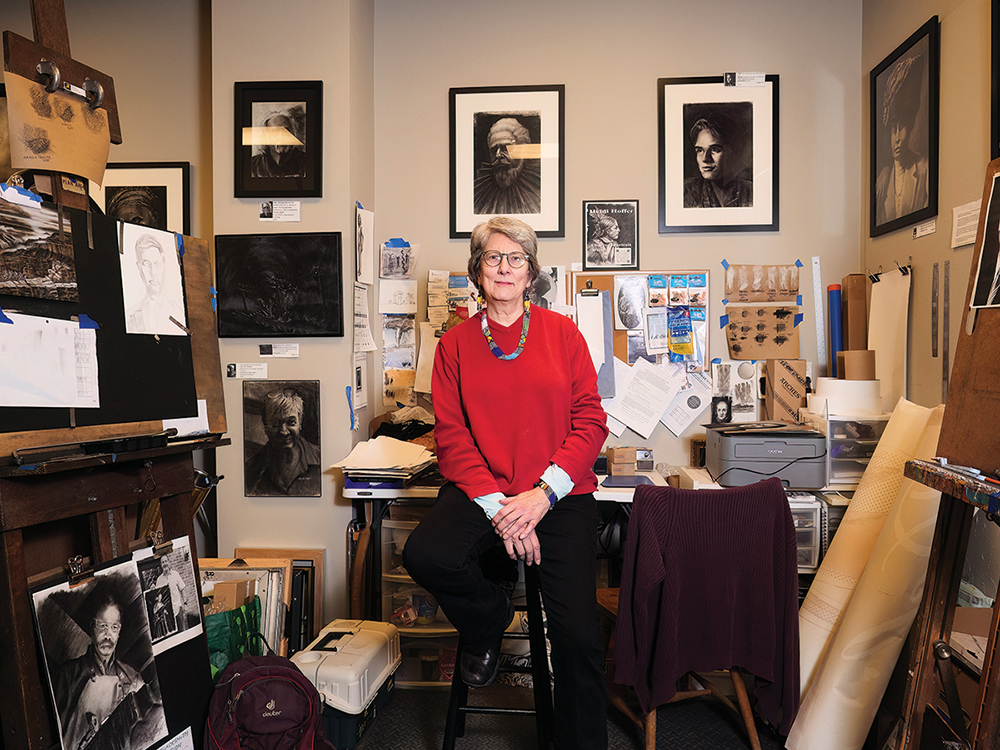
Portrait artist Heidi Hoffer in her studio.
Portrait by Ricardo Tejeda
As any art student discovers, creating a three-dimensional figure on a flat piece of paper or canvas is one of the first challenges that must be met in learning to draw. Asheville artist Heidi Hoffer conquered that challenge early in her career, choosing charcoal as her chief means of expression. Known for her portraiture and for her dramatically rendered depictions of clouds and sky, Hoffer creates not only a physical sense of depth and dimension, but a psychological one as well.
“Charcoal portraits of people and weather are sculptures on paper,” she says, “and charcoal drawing is where intense studies begin.”
An Illinois native, Hoffer was introduced to the artist’s life in childhood. “My mother was a watercolorist and graphic artist with a studio and national and university clients,” she reveals. “Watching [her] successfully balance life with art was a strong lesson.” And there were both her maternal grandparents, who worked in watercolor and oil and who shared a studio. Her grandfather’s work was nationally known, often featured on Life magazine covers in the 1930s while he maintained an active teaching career at Chicago’s American Academy of Art.

At first, Hoffer’s career as a scenic designer for theater, film, and television took precedence over studio and easel. Her work took her all over the world, including China, Egypt, and South Africa, as she designed scenery, lighting, and costumes for more than 300 productions abroad and in the United States. But all along, she drew and painted, culling inspiration from the cultures and environments her work brought to her attention.
“Eastern watercolor and calligraphy inform my strokes of the character and personality of a person or a storm, as well as the tried-and-true methods of the academic style of portraiture,” she says.
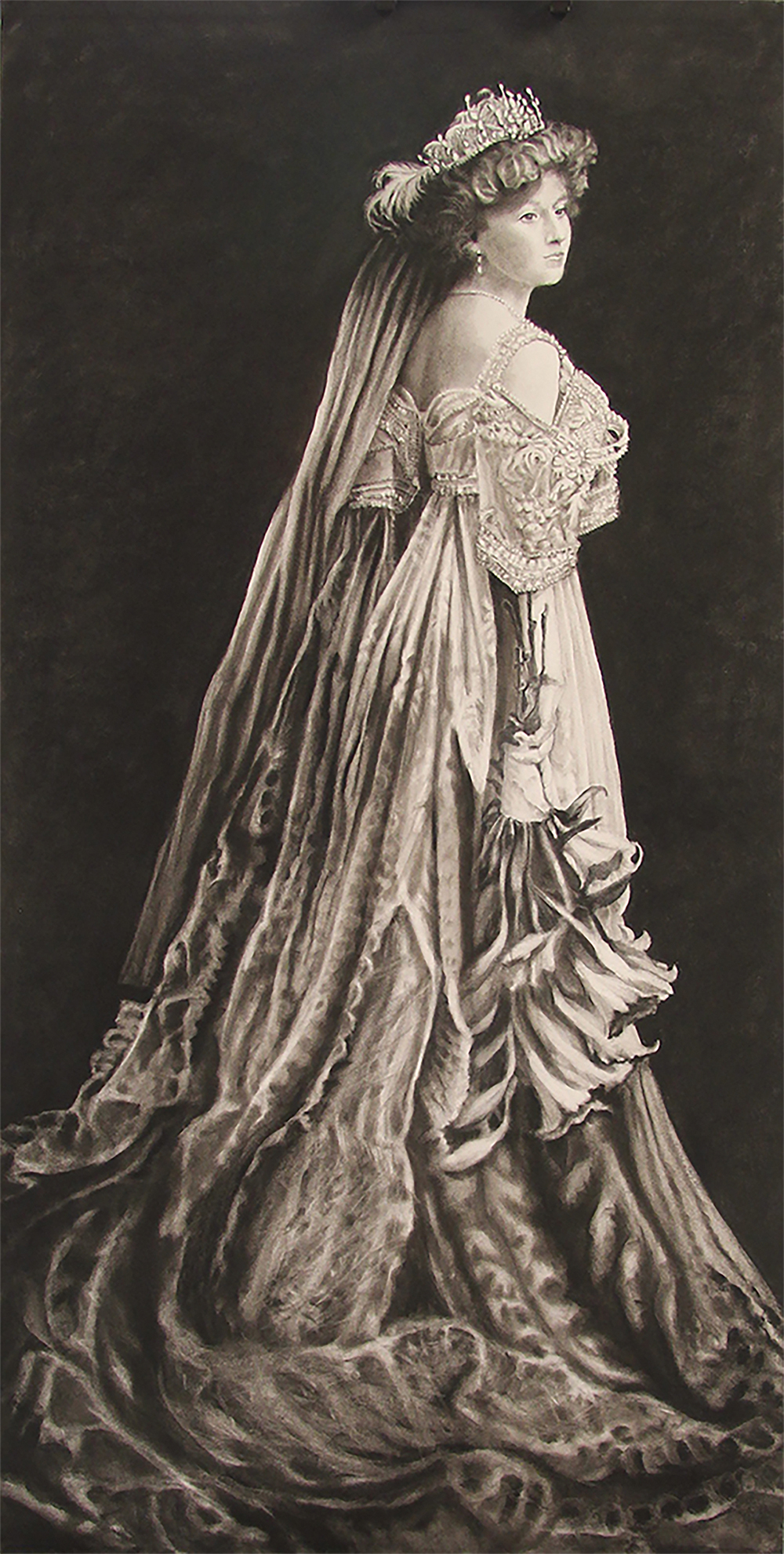
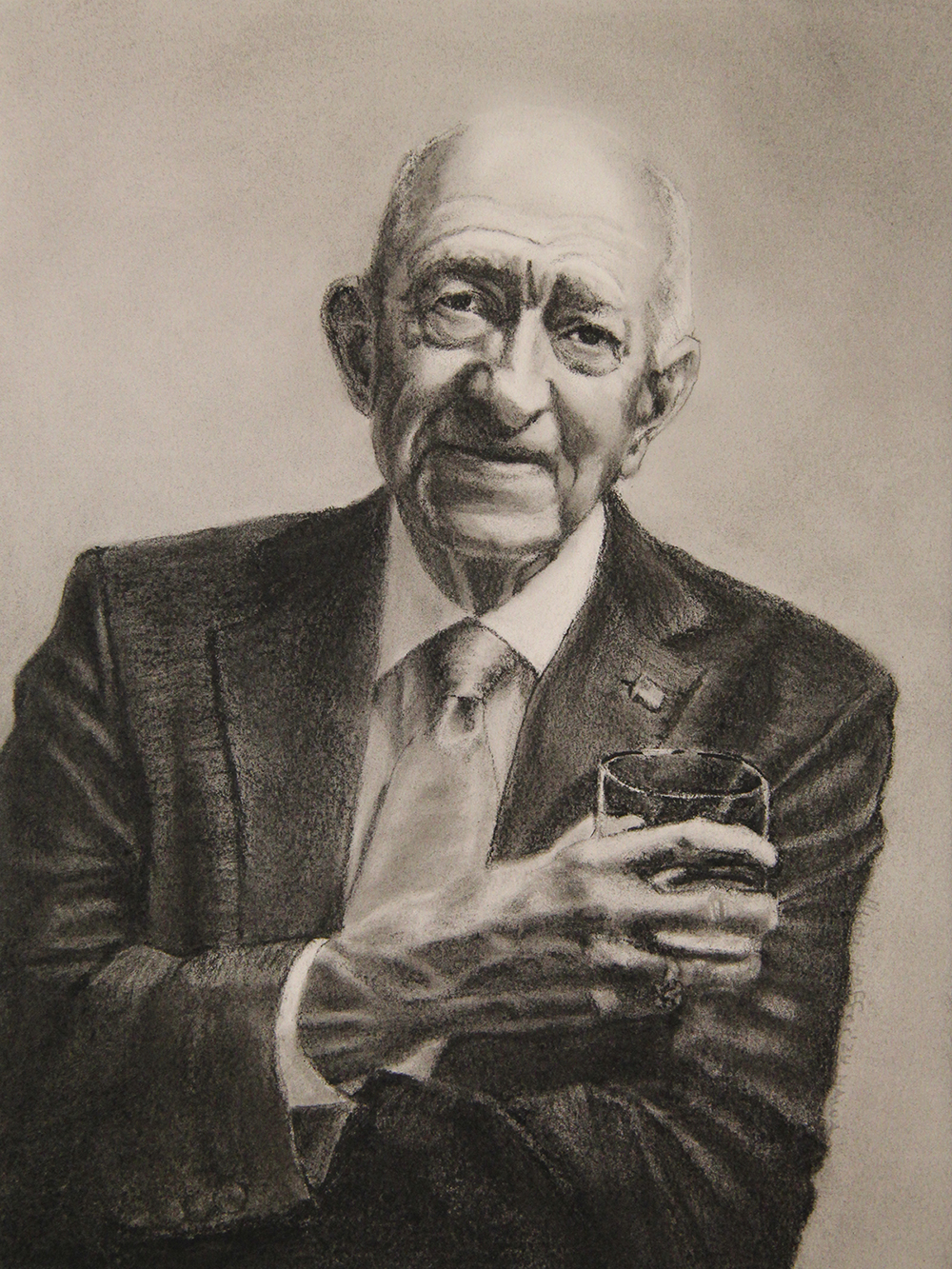
Hoffer’s portraits capture more than the physical likeness of her sitter. She uses her academic training to conjure, Rembrandt-like, the subject’s inner life. “A charcoal portrait is meant to tell a story,” she notes, and for Hoffer, that story begins with the eyes. “The flesh surrounding the eyes has been through all the joys and traumas of the sitter’s life. Capturing that … is a masterful way of leaving a visual story legacy in the form of a portrait.”
More can be communicated through accessories like glasses, jewelry, or the position of the subject’s head and shoulders. “Sometimes I ask for a story or two to help provide an understanding of the reason for a scar or laugh lines,” she says of her portrait work. Much of it is done on commission, and much of it has also received international awards and exhibitions at such prestigious venues as the Salmagundi Club in Manhattan.
Her drawings of weather phenomena — tornados, rainstorms, dramatic cloud formations — recall the minimalism of Chinese or Japanese landscapes. “My weather portraits evoke a calm feeling of safety while facing a raging storm,” she says. Hoffer draws on the limited colors that charcoal presents to add a sense of movement and energy, using brushes and foam-covered palette knives to deepen the modeling of her scenes, an unusual technique for a charcoal artist but especially effective in depicting rainfall.
Such soft, blunt marks on the page “are very effective in shaping the three-dimensional feeling of a rainstorm,” she explains. Hoffer makes prints by using treated sheets of aluminum infused with dyes and given a matte finish, another departure from the traditional lithography used for charcoal reproductions.

Actual weather has been a very real factor recently in Hoffer’s life, given that her studio is in the River Arts District that was severely damaged by flooding during Helene’s Appalachian rampage. Although Hoffer’s own space in the RAD’s NorthLight building suffered little damage, others were not so fortunate, and Hoffer, who serves on RAD’s board of directors, has been heavily involved in recovery efforts.
“All RAD artists lost six weeks of business, and it escalates in trauma from there,” she says. “Eighty per cent of our artists lost their galleries and/or studios.” Hoffer’s been active in setting up a free art-supply station, which also serves as space where recovered artwork can be returned to their makers. A few studios have reopened, with more set to open over the coming year.

“The good news is that those of us who did not lose a building have encouraged hurt artists to share wall space in our buildings,” Hoffer says. “We have joined hands and efforts to keep the working-artist culture of the River Arts District alive.”
Heidi Hoffer Charcoal Portraits, NorthLight Studios, 357 Depot St., River Arts District, Asheville, see more at hofferartanddesign.com.